/

/

Search
Category
Hot Products
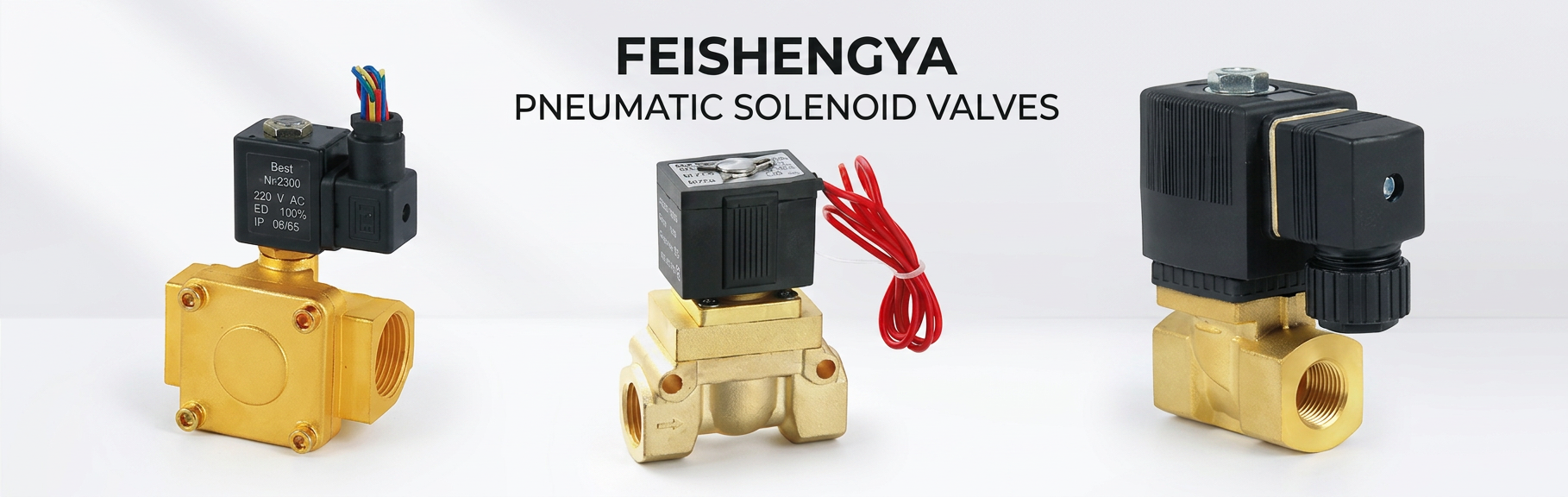
Pneumatic solenoid valves sit at the heart of how compressed air gets managed across industrial automation systems. They take electrical signals from a controller and use them to switch internal air passages open or closed, which is what actually drives cylinders, actuators, grippers, clamps, and other pneumatic devices into action. Feishengya's lineup covers the configurations you'd expect to need — 2/2-way, 3/2-way, 5/2-way, and 5/3-way structures — each available with different voltage ratings, port sizes, and mounting options so they fit into whatever pneumatic circuit you're building. Built for dependable switching, a compact footprint, and steady airflow control, these valves show up in assembly lines, packaging machinery, electronics manufacturing, food processing equipment, material handling systems, and plenty of general industrial machines besides. Backed by hands-on pneumatic component manufacturing experience and practical selection guidance, Feishengya helps customers put together compressed air control systems that are both efficient and built to last.
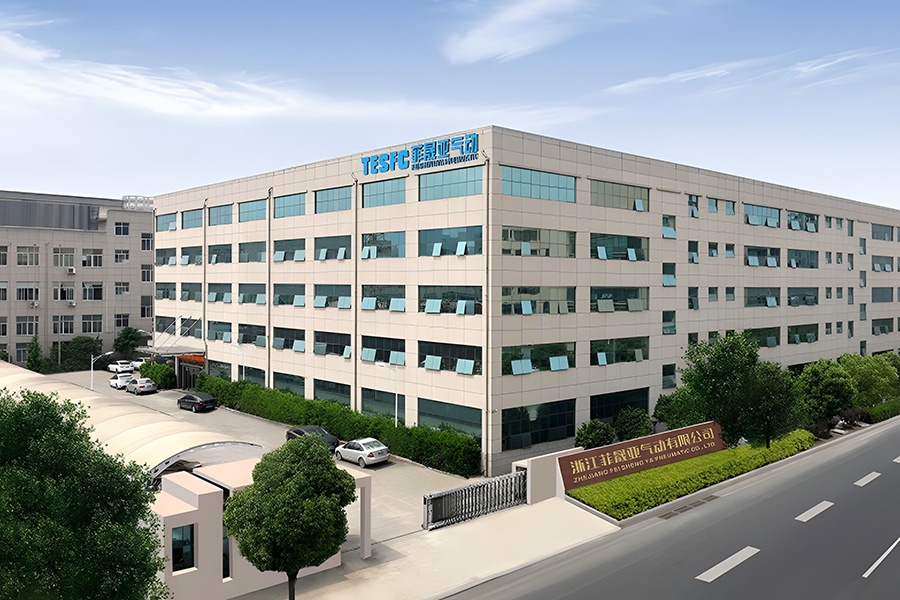
Zhejiang Feishengya Pneumatic Components Co., Ltd.
Zhejiang Feishengya Pneumatic Components Co., Ltd. is a pneumatic component enterprise that integrates scientific R&D, production and processing, operation and sales, technical services, import and export trade, and personnel training. It specializes in the production, processing, and sales of pneumatic components such as cylinders, solenoid valves, and Air Control Solenoid Valve.
The company has always adhered to serving society with practical quality, high-quality service, comprehensive technology, and reasonable prices, and is committed to striving to create a "Chinese famous brand".
Our company has nearly a hundred advanced processing pieces of equipment. There are currently 120 employees, including over 20 professional and technical personnel, with an annual production capacity of 500,000 pieces (sets) of various components. We have advanced production processes, complete testing methods and equipment, and a high-quality workforce. We organize production and sales with a practical and innovative concept, and have passed ISO9001 international quality management system certification. We use CAD, SOLIDWORKS, and ERP for engineering design and enterprise management. Continuously increasing product development efforts and investment, continuously upgrading and improving equipment and products to meet customer needs with higher cost-effectiveness, and providing high-performance products and convenient and fast services to new and old users anytime, anywhere.
Pneumatic Valve manufacturer - Feishengya Pneumatic adheres to the principles of "strict production, scientific management, continuous improvement, and stable quality with a rigorous and down-to-earth work style, a pioneering spirit of self-improvement, an honest and down-to-earth management style, and first-class production technology. Relying on the increasingly mature market system and flexible industry mechanisms, we adhere to the development path of technology oriented, outward oriented, and comprehensive, and provide more and better quality services for various industries.
All employees of Zhejiang Feishengya Pneumatic Components Co., Ltd. sincerely welcome friends from all industries to visit, exchange ideas and cooperate with us.
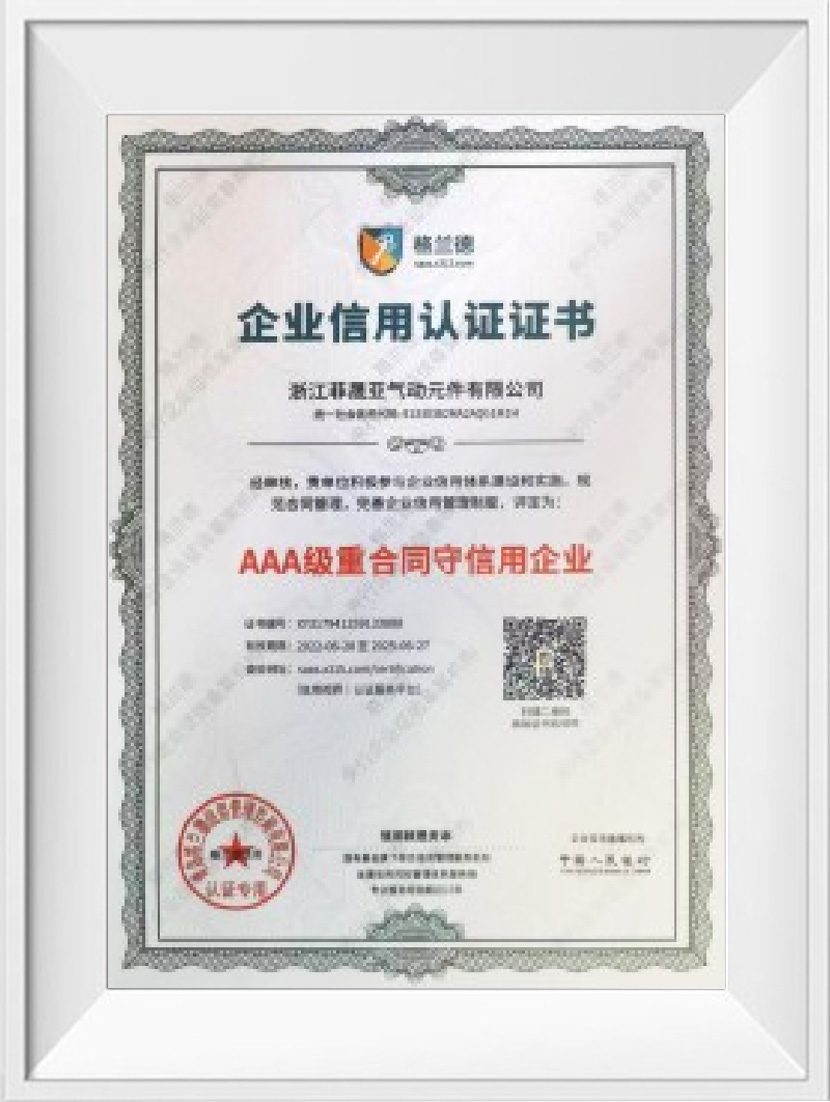
Certificate
Certificate-cs
Certificate-cs
Certificate-cs
Our LATEST NEWS

2026-08-21

2026-01-26
2026-01-25
Feishengya supplies pneumatic solenoid valves to automation equipment manufacturers, mechanical engineers, pneumatic system integrators, industrial machinery companies, and OEM/ODM projects — helping them get steadier air control, quicker machine response, less wasted air, and pneumatic circuits that come together without a fight. Where a lot of suppliers stop at just listing standard valve models, Feishengya goes further, drawing on real pneumatic system knowledge, dependable manufacturing capability, and the flexibility to help pick the right model for whatever automation need comes up.
A pneumatic solenoid valve is, put simply, an electrically controlled valve that starts, stops, or redirects compressed air moving through a pneumatic system. It's the point where an electrical signal turns into pneumatic action. Once the solenoid coil gets power, it generates an electromagnetic force that shifts the internal spool or poppet, and that shift is what changes the airflow path running through the valve.
Across automated equipment, these valves typically handle control duties for air cylinders, rotary actuators, pneumatic grippers, clamping devices, and other air-driven mechanisms. How well the whole pneumatic circuit runs — how stable, how efficient — comes down largely to the valve's switching speed, sealing quality, flow capacity, voltage compatibility, and port configuration.
A pneumatic solenoid valve takes an electrical signal and turns it into controlled pneumatic movement. In a standard automation setup, the PLC or controller fires off an electrical command to the solenoid coil, the valve shifts its internal position in response, and compressed air gets directed to the right port.
That's what lets pneumatic actuators carry out actions like:
It's worth being clear about one thing: the valve doesn't produce compressed air on its own. Its job is deciding when and where that air flows. That's precisely why it counts as one of the core control components in any pneumatic automation system.
Inside a typical pneumatic solenoid valve, you'll find a valve body, solenoid coil, armature, spring, sealing element, and a set of internal flow passages. Energize the coil, and the resulting electromagnetic force shifts the internal mechanism — that shift opens up the air passage and lets compressed air flow through specific ports.
Cut power to the coil, and depending on how the valve is built, either the spring or pilot pressure pulls it back to its original position.
The functions this setup handles typically include:
It's a fast, uncomplicated control method — which is exactly why pneumatic solenoid valves hold up so well in industrial operations that run the same motion over and over, thousands of times a day.
Pneumatic solenoid valves come in several functional structures, and each one fits a different type of compressed-air control task. The right choice depends on actuator type, air circuit logic, required stop behavior, and control method.
A 2/2-way valve keeps things simple — two ports, two positions, built for basic ON/OFF air control.
You'll typically find it handling:
If all a system really needs is to either let air through or block it entirely, this is the type that fits.
Step up to a 3/2-way valve and you get three ports working across two positions — a common choice for single-acting cylinders or general pneumatic signal control.
It shows up in applications like:
What makes it useful is the switching behavior itself: one position supplies air, the other exhausts it.
A 5/2-way valve brings five ports and two positions into play, and it's the go-to choice for double-acting pneumatic cylinders.
Typical jobs include:
Given how common double-acting cylinders are across industrial machinery, this valve type ends up being one of frequently used in automation setups generally.
A 5/3-way valve adds a third position into the mix — five ports, three positions — with the center position configured as closed, exhausted, or pressurized depending on the specific model.
Center functions generally break down as:
This valve type earns its place when a process calls for an intermediate control state, or when a cylinder needs to stop in a safer, more controlled way during certain automation sequences.
Pneumatic solenoid valves can also be classified by coil configuration.
| Valve Type | Working Characteristic | Common Use |
|---|---|---|
| Single solenoid valve | Returns by spring or air pilot after power is removed | Simple extension and return control |
| Double solenoid valve | Uses two coils to switch between two positions | Memory-position pneumatic circuits |
| Pilot-operated valve | Uses pilot air to move the main spool | Larger flow and higher actuator demand |
| Direct-acting valve | Coil directly moves the sealing element | Small flow or low-pressure applications |
This classification helps engineers select the right valve according to control logic, flow demand, and installation conditions.
Fast switching, reliable airflow direction control, compact structure, and strong circuit compatibility are the main reasons pneumatic solenoid valves have become standard components across automation systems.
Pneumatic solenoid valves switch between air passages quickly — and in automated machinery, that speed matters a lot, since cylinders, grippers, and actuators all need to move on precise timing.
A fast response tends to pay off in a few key areas:
For anything running high-frequency cycles, response time and coil reliability deserve a close look during the selection process.
At its core, a pneumatic solenoid valve exists to control which way airflow goes. Pair it correctly with the right actuator, and the system's movement becomes genuinely predictable.
That precision counts most in situations like:
Get the directional control right, and you cut down on movement errors while making equipment behave more consistently overall.
A lot of pneumatic solenoid valves come in compact builds, which makes them a good fit for control cabinets, machine frames, valve manifolds, and any automation equipment where space runs tight.
That compact footprint tends to bring a few real advantages:
And when several valves need to work together, mounting them on a manifold can simplify both piping and wiring considerably.
Choose the right valve, and you end up wasting a lot less compressed air. Good sealing, correctly sized ports, and response characteristics that actually match the application all feed into better system efficiency.
Since compressed air isn't cheap to produce, the valve you pick ends up influencing operating cost, compressor load, and how stable the whole system stays over time.
Pneumatic solenoid valves are typically built from aluminum alloy, brass, stainless steel, engineering plastics, and wear-resistant sealing materials — the exact mix depends on the working medium, pressure range, environment, and how demanding the service conditions are.
For industrial use, durability really comes down to a handful of factors:
A valve worth relying on should keep switching consistently even after heavy, repeated use.
Selecting the right pneumatic solenoid valve means balancing flow demand, actuator type, voltage, pressure, air quality, and installation layout. A mismatch in any one of these areas can lead to slow movement, unstable switching, leakage, or unnecessary air consumption.
Port size needs to line up with what the pneumatic actuator actually demands in terms of airflow. Go too small on valve flow, and the cylinder ends up sluggish or inconsistent with its force. Go too big, and you lose efficiency and precision instead.
A handful of factors typically drive flow selection:
When you're dealing with high-speed cylinders, don't just focus on inlet capacity — exhaust capacity matters just as much.
Deciding between 2/2, 3/2, 5/2, and 5/3 structures really comes down to how the pneumatic circuit itself is designed.
As a general rule of thumb:
Whatever structure you land on, it needs to match both the actuator and the machine's underlying safety logic.
Coil voltage varies across pneumatic solenoid valves — you'll see both DC and AC options — and whatever you choose has to match the control system it's plugging into.
A few coil-related factors are worth paying attention to:
For anything running continuously, coil temperature and electrical stability move to the top of the list.
Most pneumatic solenoid valves are built with the assumption that they'll be running on clean, dry, filtered compressed air. Feed them poor-quality air, and you risk spool sticking, seal wear, leakage, or a valve that just responds slower than it should.
A well-prepared air system generally covers:
Get the air preparation right, and valve service life and system reliability both benefit noticeably.
Pneumatic solenoid valves can go in individually or sit on a manifold — which route makes sense depends on machine layout, how easy maintenance access needs to be, and how complex the pneumatic circuit is overall.
Installation options generally include:
Clear labeling, tidy tubing runs, and wiring that's easy to reach — small details, but they make a real difference when maintenance time rolls around.
Pneumatic solenoid valves show up wherever compressed air needs to be controlled electrically. From cylinder sequencing to gripper actuation and packaging motion control, they sit at the center of countless automated pneumatic systems.
On assembly lines, pneumatic solenoid valves take charge of the cylinders doing the pressing, positioning, clamping, pushing, and transferring — and it's that valve control that keeps every motion step falling into place in the right sequence.
Packaging systems lean on these valves to run sealing cylinders, cutting mechanisms, sorting devices, lifting units, and product guiding components. Since packaging tends to run continuously, fast response and steady airflow aren't optional extras — they're what keeps the whole process from stalling.
Filling, capping, sorting, and general product handling equipment all rely on pneumatic solenoid valves to drive their air actuators. Given the working conditions in food processing, material choice and resistance to the environment need real attention here.
Electronics automation calls for compact valves — the kind that can handle small cylinders, pick-and-place units, testing fixtures, and precision assembly devices without taking up much room. In this field, stable response and a small footprint matter more than almost anything else.
Welding fixtures, clamping systems, transfer lines, inspection machines, and general industrial automation equipment all put pneumatic solenoid valves to work widely across the sector, where they deliver the repeatable movement and efficient air control that these applications depend on.
Feishengya approaches pneumatic solenoid valves as part of a complete air-control system, not as isolated components. That system-level understanding helps customers choose valves that match actuator behavior, airflow demand, electrical control logic, and long-term equipment reliability.
Feishengya's focus sits squarely on pneumatic components — cylinders, solenoid valves, and everything related — and that hands-on product background is exactly what gives the company real insight into how valves actually interact with actuators, air preparation units, fittings, and the control systems tying it all together.
For machine builders and engineering teams, that translates into something practical: the valve doesn't get treated as some isolated part, but as one piece fitting into a complete pneumatic circuit.
Every application brings its own requirements — different valve structures, voltages, port sizes, installation methods. Feishengya helps narrow down the right pneumatic solenoid valve by working through working pressure, actuator type, control mode, flow demand, and mounting requirements together.
That kind of guidance goes a long way toward cutting down mismatch risks, whether you're designing new equipment or swapping out an existing part.
Zhejiang Feishengya Pneumatic Components Co., Ltd. brings product development, production, processing, technical service, and international trade together under one roof. Production equipment, testing methods, CAD, SOLIDWORKS, and ERP management all work in concert to keep products consistent batch after batch.
For pneumatic solenoid valves specifically, that consistency shows up in machining accuracy, coil performance, seal assembly, and leakage inspection — the details that ultimately determine whether a valve holds up reliably in industrial use.
Feishengya puts together pneumatic solenoid valve solutions for automation equipment, industrial machinery, pneumatic control systems, and custom project needs — configuring by valve type, voltage, connection method, flow requirement, and system layout as each situation calls for.
As a pneumatic solenoid valve supplier based in China, Feishengya keeps the focus on real-world product performance and dependable application matching, built for industrial use on a global scale.

Phone: +86-15957736756
E-mail: [email protected]
Add: No.7, Yongxing Second Road, Chengdong Industrial Functional Zone, Chengdong Subdistrict, Yueqing City, Zhejiang Province, P.R.China
Copyright © Zhejiang Feishengya Pneumatic Components Co., Ltd. All Rights Reserved.
 Pneumatic Solenoid Valve Supplier
 English
 русский
 عربى
عربى Español