/

/

Search
Category
Hot Products
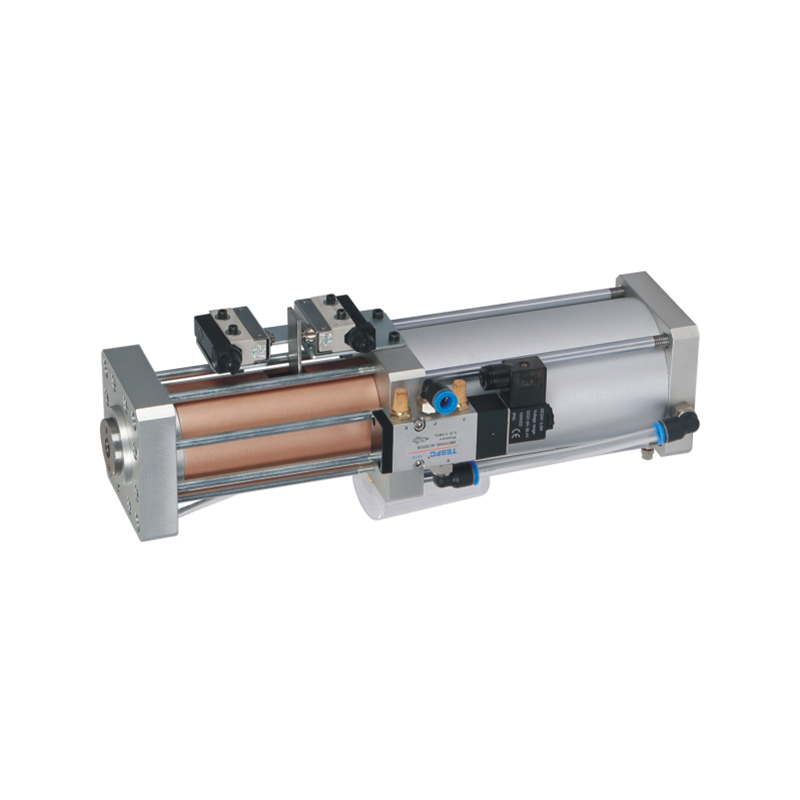
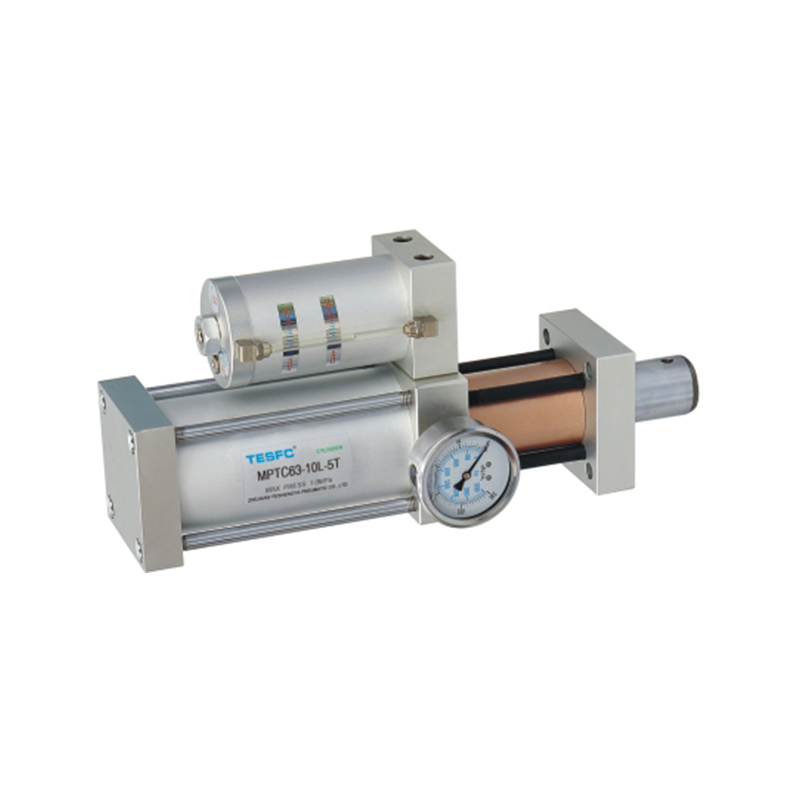
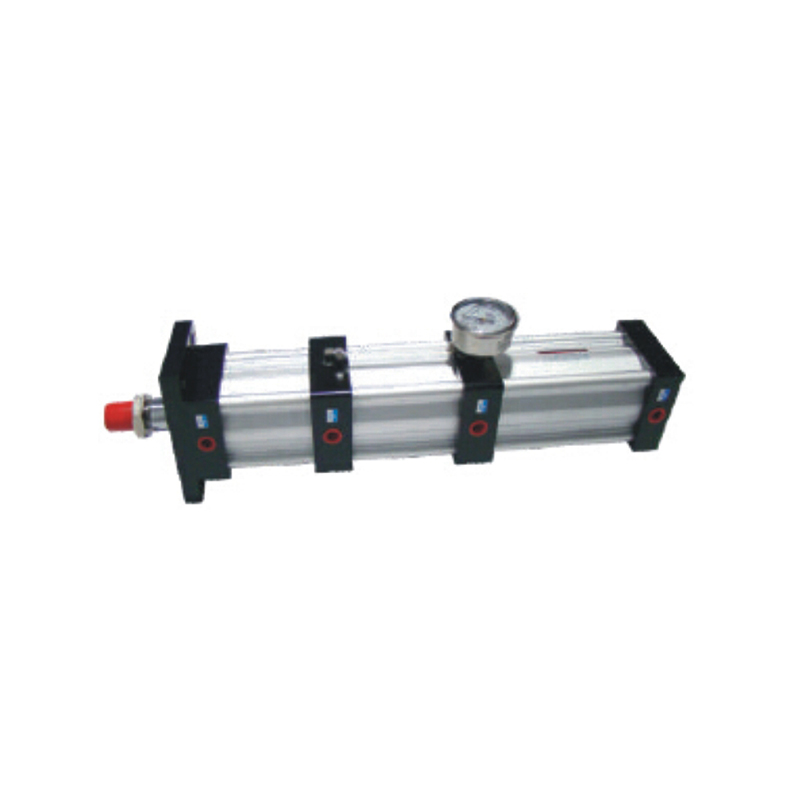
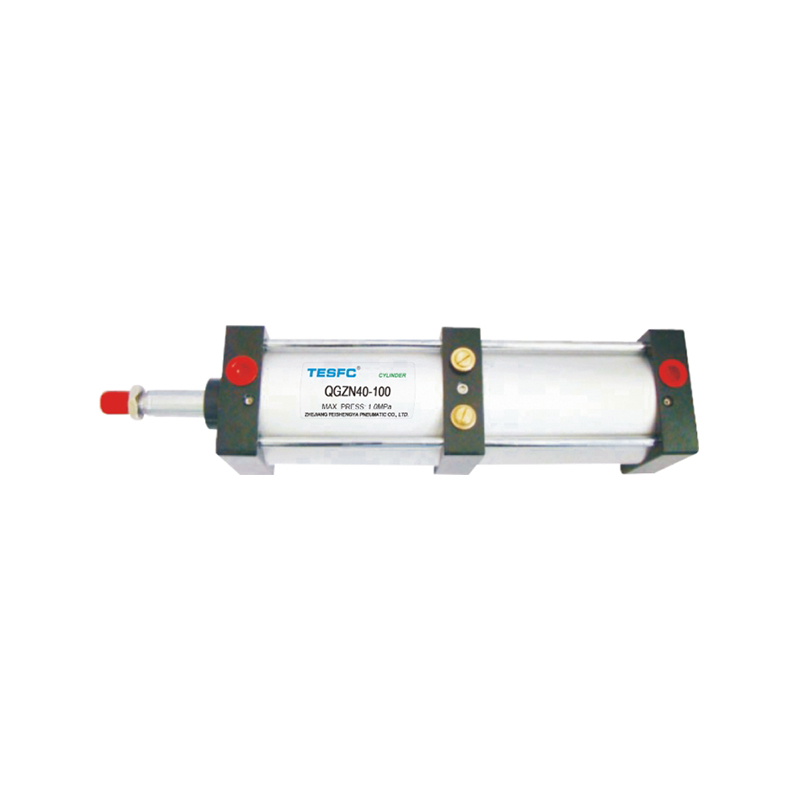
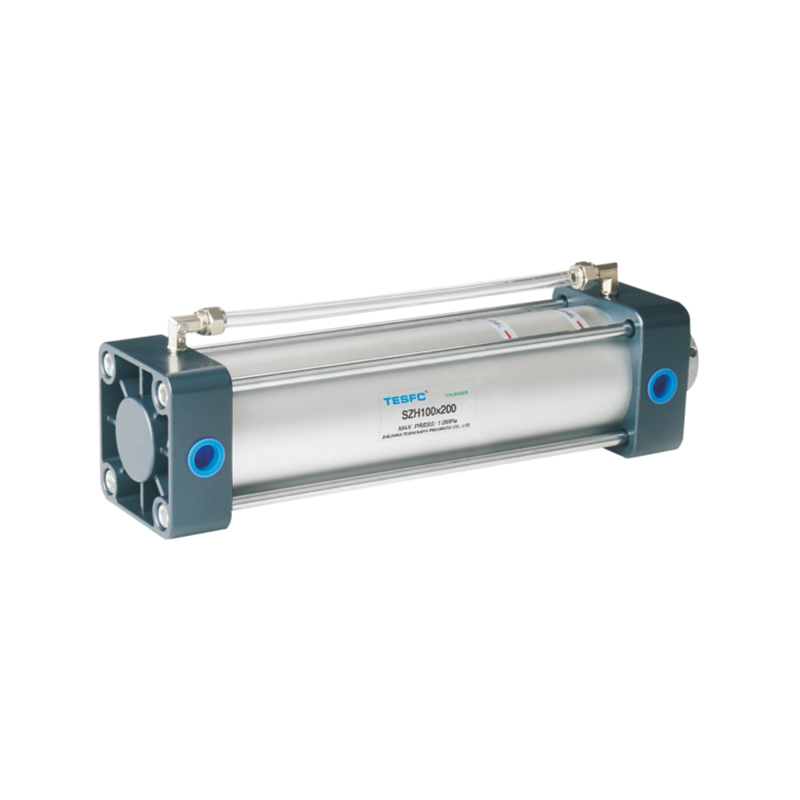
Compact structure, stable motion, increased output force — that's the combination driving demand for Gasliquid Booster Cylinders across industrial machines that can't rely on standard actuators alone. Combining compressed air with hydraulic pressure intensification gives this hybrid actuator a real edge, working as a practical alternative wherever oversized pneumatic cylinders or overly complex hydraulic systems would otherwise be needed.
Pressing, clamping, riveting, punching, forming, and automated assembly equipment all make regular use of this actuator type. Feishengya supplies Air Hydraulic Booster Cylinder options built specifically for machine builders, automation integrators, mechanical engineers, pneumatic component distributors, and OEM/ODM projects working across these applications.
Manufacturing experience, ISO9001 quality control, engineering design support, and flexible configurations all come together in what Feishengya offers here — giving industrial users a genuine path toward better actuation stability, tighter installation space savings, and cylinders that adapt readily to whatever production environment they end up running in.
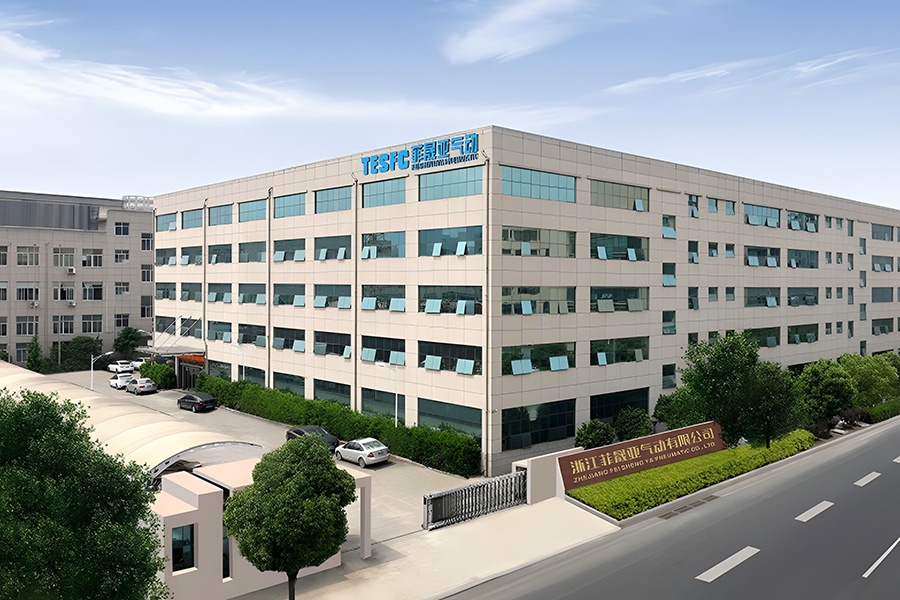
Zhejiang Feishengya Pneumatic Components Co., Ltd.
Zhejiang Feishengya Pneumatic Components Co., Ltd. is a pneumatic component enterprise that integrates scientific R&D, production and processing, operation and sales, technical services, import and export trade, and personnel training. It specializes in the production, processing, and sales of pneumatic components such as cylinders, solenoid valves, and High Force Pneumatic Cylinder.
The company has always adhered to serving society with practical quality, high-quality service, comprehensive technology, and reasonable prices, and is committed to striving to create a "Chinese famous brand".
Our company has nearly a hundred advanced processing pieces of equipment. There are currently 120 employees, including over 20 professional and technical personnel, with an annual production capacity of 500,000 pieces (sets) of various components. We have advanced production processes, complete testing methods and equipment, and a high-quality workforce. We organize production and sales with a practical and innovative concept, and have passed ISO9001 international quality management system certification. We use CAD, SOLIDWORKS, and ERP for engineering design and enterprise management. Continuously increasing product development efforts and investment, continuously upgrading and improving equipment and products to meet customer needs with higher cost-effectiveness, and providing high-performance products and convenient and fast services to new and old users anytime, anywhere.
Air Hydraulic Booster Cylinder manufacturer & supplier - Feishengya Pneumatic adheres to the principles of "strict production, scientific management, continuous improvement, and stable quality with a rigorous and down-to-earth work style, a pioneering spirit of self-improvement, an honest and down-to-earth management style, and first-class production technology. Relying on the increasingly mature market system and flexible industry mechanisms, we adhere to the development path of technology oriented, outward oriented, and comprehensive, and provide more and better quality services for various industries.
All employees of Zhejiang Feishengya Pneumatic Components Co., Ltd. sincerely welcome friends from all industries to visit, exchange ideas and cooperate with us.
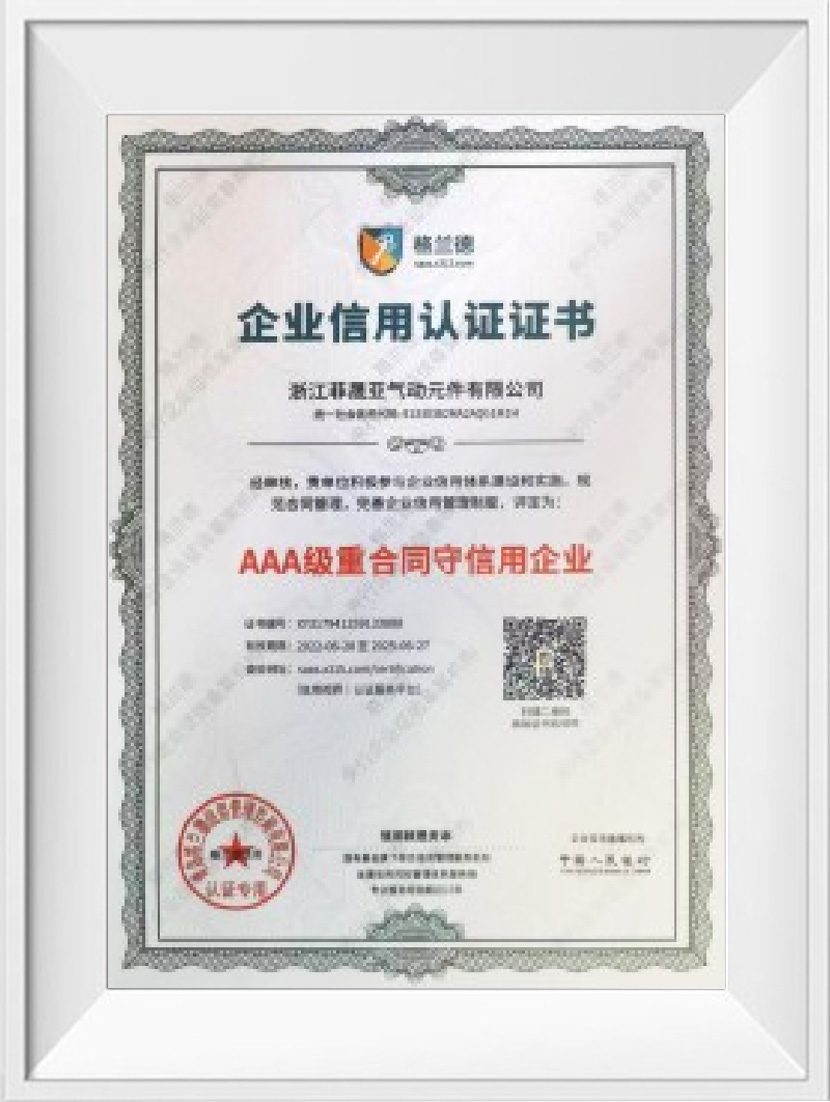
Certificate
Certificate-cs
Certificate-cs
Certificate-cs
Our LATEST NEWS

2026-10-02

2026-09-25
2026-09-18
Higher output force, compact machine design, stable motion control, reduced pneumatic energy demand — Feishengya builds Gasliquid Booster Cylinder solutions around exactly these four goals for automation equipment manufacturers, mechanical engineers, pneumatic component distributors, and OEM/ODM projects alike. Suppliers offering only standard pneumatic cylinders stop short of what industrial users often need here, whereas Feishengya backs its components with genuine pneumatic manufacturing experience, flexible cylinder configurations, ISO9001 quality management, and engineering support grounded in CAD, SOLIDWORKS, and structured production control.
Compressed air and hydraulic fluid work together in one actuation system — that's the defining trait of a Gasliquid Booster Cylinder, also called an Air Hydraulic Booster Cylinder. Pneumatic pressure supplies the driving force, while hydraulic pressure intensification handles the amplification side of things.
That design finds its niche in industrial processes sitting in an awkward middle ground: a regular pneumatic cylinder falls short on pressing force, yet a full hydraulic system demands more space, piping, and maintenance than the job really calls for. Gasliquid Booster Cylinders step into exactly that gap.
Compressed air gets converted into intensified hydraulic force — that's the core function driving a Gasliquid Booster Cylinder. It technically sits within the air cylinder category, yet performs quite differently from a standard pneumatic cylinder thanks to the integrated hydraulic pressure chamber sitting at its core.
Pressure conversion and force amplification together form the operating principle here.
This structure lets the actuator function as a High Force Pneumatic Cylinder while still holding onto the installation convenience typical of pneumatic equipment. Machines needing high pressing force without a complete hydraulic power unit find this particularly useful.
Compressed air alone drives a regular pneumatic cylinder, with output force depending mainly on bore size and air pressure. Higher force requirements often push toward a larger bore in that setup — and installation space grows right along with it.
A Gasliquid Booster Cylinder takes a different route, pairing pneumatic input with hydraulic amplification. Stronger output becomes possible from a compact body as a result, making this design a natural fit wherever space, cycle stability, and force density all matter at once.
Stroke structures, pressure ranges, mounting styles — different industrial machines pull in different directions on all three, which is exactly why Gasliquid Booster Cylinders get selected according to output mode, installation layout, and control requirements rather than a single fixed spec.
Pneumatic drive and hydraulic boosting combine into a single compact unit here, well suited for machines working with limited installation space.
A separated booster and actuator structure allows flexible installation across machines with more complex layouts.
Applications requiring stroke control, positioning adjustment, or process tuning find their fit in this design.
Press-fit assembly, bearing installation, and component joining all rely on this type.
Stable clamping force gets delivered to fixtures, jigs, and automated tooling through this configuration.
Punching, piercing, and light metal processing suit this variant well.
Riveting systems that demand consistent force and repeatable motion turn to this type.
Shaping, bending, and compression processes across light manufacturing lines run on this configuration.
Several machine control systems can absorb Gasliquid Booster Cylinders without much friction:
That flexibility is really what makes the Air Hydraulic Booster Cylinder useful across both new machine design work and equipment modification projects alike.
Pneumatic simplicity meets hydraulic force density in a Gasliquid Booster Cylinder, and that combination is really where the value comes from. Power, stability, and installation convenience all get balanced together through this hybrid approach — a rare enough combination that automated machines keep gravitating toward it.
Stronger output than many standard air cylinders of similar size becomes possible through the internal pressure intensification structure. Machine footprint shrinks as a result, without engineers having to sacrifice required actuation force to get there.
Typical processes include:
Space-limited machines find this compact force output a compelling reason on its own to select a High Force Pneumatic Cylinder built on gas-liquid boosting technology.
Sudden impact, vibration, and pressure fluctuation all get dialed back thanks to the hydraulic fluid working inside the cylinder. That matters a lot in applications where movement consistency ties directly into product quality.
Stable motion pays off particularly in:
Force transmission during the working stroke stays noticeably more controlled here than with air-only actuation.
Compressed air drives the process, then gets converted into amplified hydraulic output — that's the core mechanism reducing the need for larger air cylinders or full hydraulic stations in a lot of applications.
Practical benefits follow from that:
Standard mounting options work fine for Gasliquid Booster Cylinders, and connection to common pneumatic control systems follows the same straightforward path. Complicated hydraulic piping mostly drops out of the picture as a result.
Maintenance tends to come down to:
Long-term, stable operation in repetitive production environments follows naturally once selection and installation are both handled properly.
Feishengya supports different cylinder sizes, stroke lengths, pressure specifications, and mounting structures. Engineers can select a configuration according to machine space, target force, cycle frequency, and control method.
Key selection parameters include:
| Fault | Possible Cause | Recommended Solution |
|---|---|---|
| Cylinder moves slowly | Low pressure, restricted fitting, small valve flow, blocked silencer | Check pressure, select correct port size, clean or replace silencer |
| Cylinder force is insufficient | Incorrect bore size, pressure loss, internal leakage | Recalculate force requirement, inspect seals, check air circuit leakage |
| Solenoid valve does not switch | Wrong voltage, coil failure, dirty spool, wiring issue | Confirm voltage, inspect coil, clean air supply, check electrical connection |
| Air leakage at fitting | Damaged tube end, worn O-ring, incorrect tube diameter | Cut tube squarely, replace fitting, use compatible tube |
| Unstable actuator movement | Moisture in air, pressure fluctuation, poor alignment | Improve air treatment, stabilize pressure, correct mechanical alignment |
| Excessive noise | Exhaust airflow too high, missing silencer, high impact speed | Install silencer, adjust flow control, use cushioning |
| Tube slips out | Tube not fully inserted, damaged gripping claw, wrong tube size | Reinsert tube correctly, replace fitting, verify tube specification |
| Valve response delay | Low pilot pressure, contaminated valve, undersized air path | Check pilot pressure, clean or replace valve, improve airflow capacity |
Compact high-force actuation shows up across a surprising range of industries, and Gasliquid Booster Cylinders tend to be the answer wherever that need arises. Machines that require force stability but don't quite justify a full hydraulic system find the hybrid design particularly practical here.
Automotive component production draws on Gasliquid Booster Cylinders for:
Process consistency across repeated assembly operations owes a lot to that stable force output.
Controlled force matters a great deal in electronics manufacturing, where damaging components is a constant risk. The Air Hydraulic Booster Cylinder supports:
Equipment with limited internal space benefits from its smooth motion and compact structure.
Light metal processing puts the cylinder to work in:
Amplified output force helps carry these forming processes without pulling in large hydraulic equipment as backup.
Plastic part production leans on Gasliquid Booster Cylinders for:
Force-demanding steps integrate into automated or semi-automated lines more easily as a result.
Stable actuation translates directly into better repeatability across robotic auxiliary equipment. Typical applications include:
Pneumatic control paired with hydraulic force amplification gives machine builders exactly what they're after — reliable actuation that still fits in compact spaces.
Machine performance, service life, process stability — correct cylinder selection touches all three at once, which is exactly why force requirements and operating conditions both deserve careful evaluation before engineers commit to a choice.
Calculating the force needed for pressing, clamping, punching, or forming comes first here. Material resistance, tooling friction, safety margin, and process variation all factor into that number, not just the nominal load.
Insufficient force tends to produce unstable results down the line. Excessive force cuts the other way — damaging tooling, fixtures, or workpieces instead.
Stroke length needs to cover the full working movement without unnecessary travel tacked on. Excessive stroke tends to increase cycle time and mechanical wear, neither of which helps anyone.
Working speed should stay compatible with:
Space-limited machines benefit from the compact structure of a Gasliquid Booster Cylinder, but that compactness still needs verification across several dimensions:
Stable compressed air supply really is essential rather than optional here. Air pressure, flow rate, filtration, and lubrication conditions all shape cylinder response and service life together.
A few system considerations tend to matter most:
Sensor feedback and pressure protection can meaningfully improve process control in automated production settings. Depending on equipment design, engineers may reach for:
These features give operators a way to catch abnormal movement, pressure loss, or mechanical interference before it becomes a bigger problem.
Cylinders and solenoid valves anchor Feishengya's pneumatic component focus, with production capability and engineering support running side by side rather than as separate concerns. Gasliquid Booster Cylinder applications lean heavily on stable manufacturing control and practical technical communication for good reason — cylinder performance feeds directly into machine efficiency and process consistency down the line.
Advanced machining equipment, professional technical staff, and structured production processes form the backbone of how Feishengya operates. CAD, SOLIDWORKS, and ERP systems handle engineering design and management on top of that, keeping coordination clearer from initial product design all the way through production tracking.
ISO9001 quality management system certification is something Feishengya has already passed. For pneumatic and gas-liquid actuation components specifically, quality control ends up being essential across sealing performance, pressure stability, dimensional accuracy, and long-term durability — none of these can really be treated as optional.
A few quality-related factors carry particular weight:
Different cylinder dimensions, mounting structures, and pressure ratings tend to show up constantly across industrial automation projects. Feishengya supports multiple sizes and configuration options here, giving equipment manufacturers room to integrate the cylinder across different machine platforms without forcing a one-size-fits-all approach.
Several concrete benefits follow from Feishengya's Gasliquid Booster Cylinder in real-world use:
Manufacturing lines that need reliable high-force actuation without complicated installation demands tend to find this product a natural fit.

Phone: +86-15957736756
E-mail: [email protected]
Add: No.7, Yongxing Second Road, Chengdong Industrial Functional Zone, Chengdong Subdistrict, Yueqing City, Zhejiang Province, P.R.China
Copyright © Zhejiang Feishengya Pneumatic Components Co., Ltd. All Rights Reserved.
 High Force Pneumatic Cylinder Factory
 English
 русский
 عربى
عربى Español