/

/

Search
Category
Hot Products
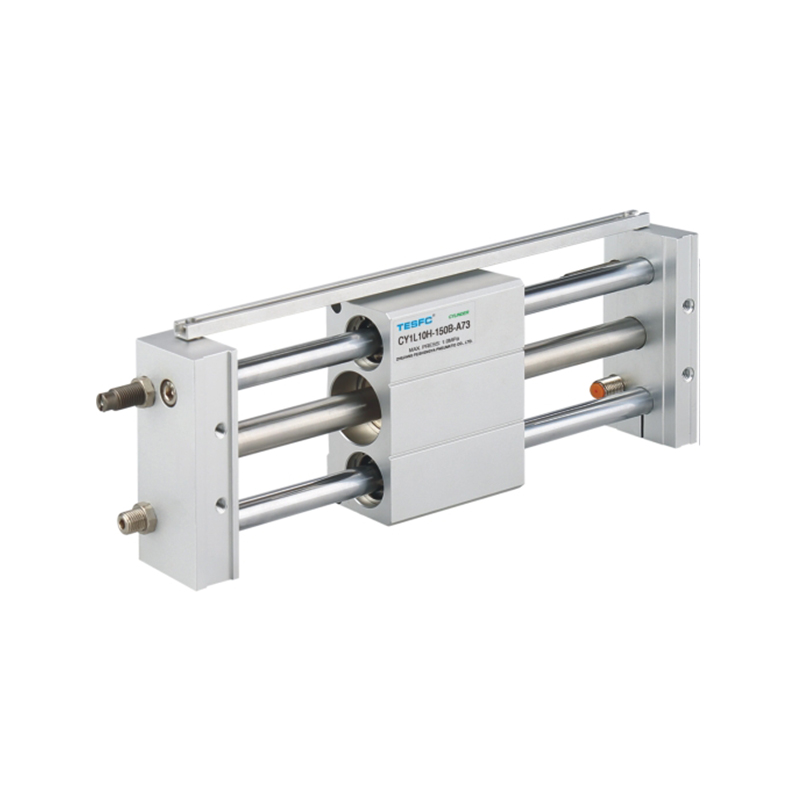
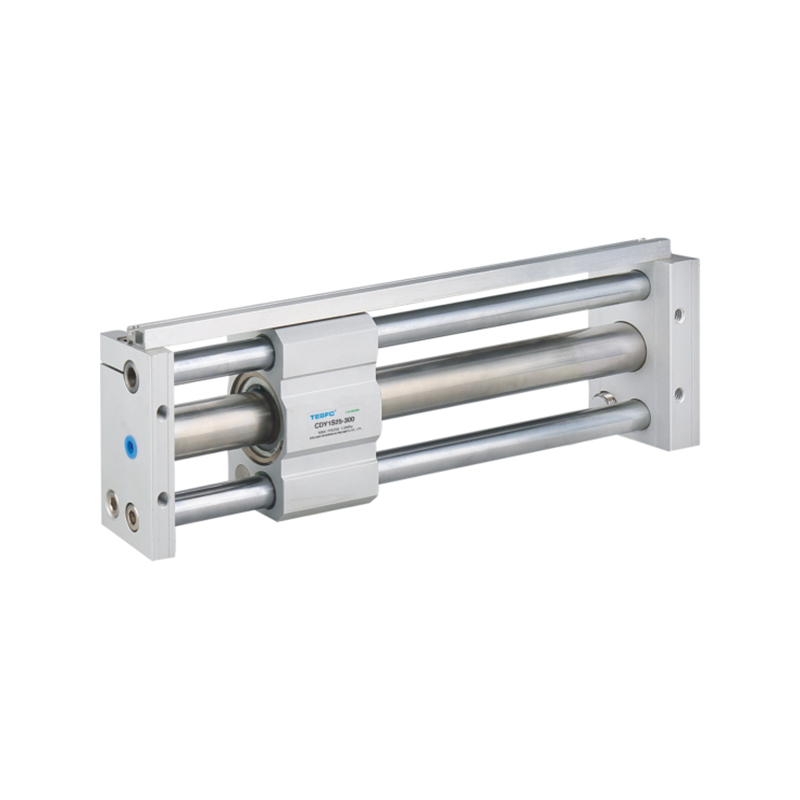
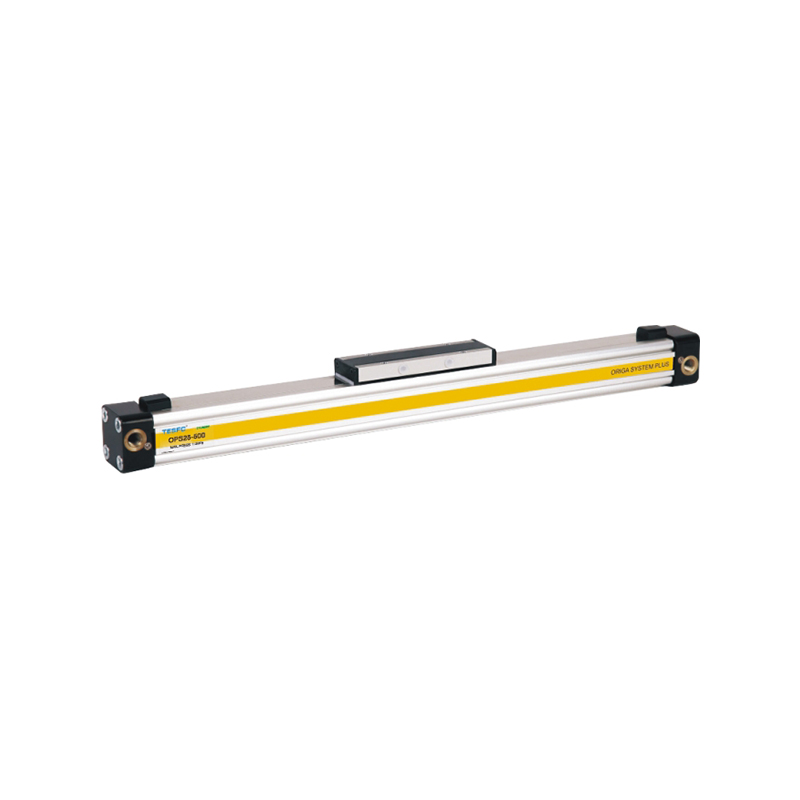
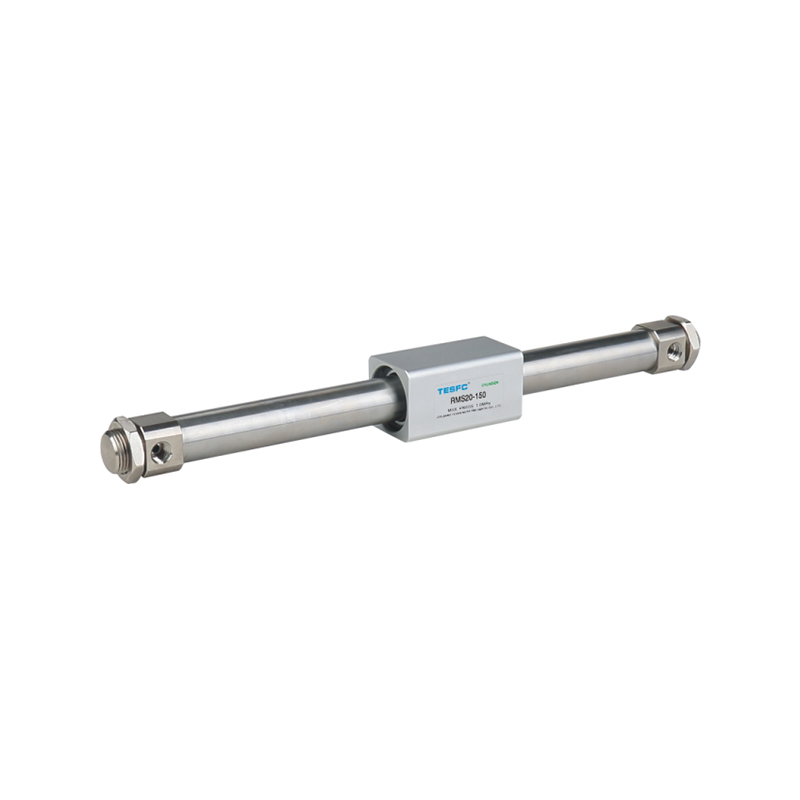
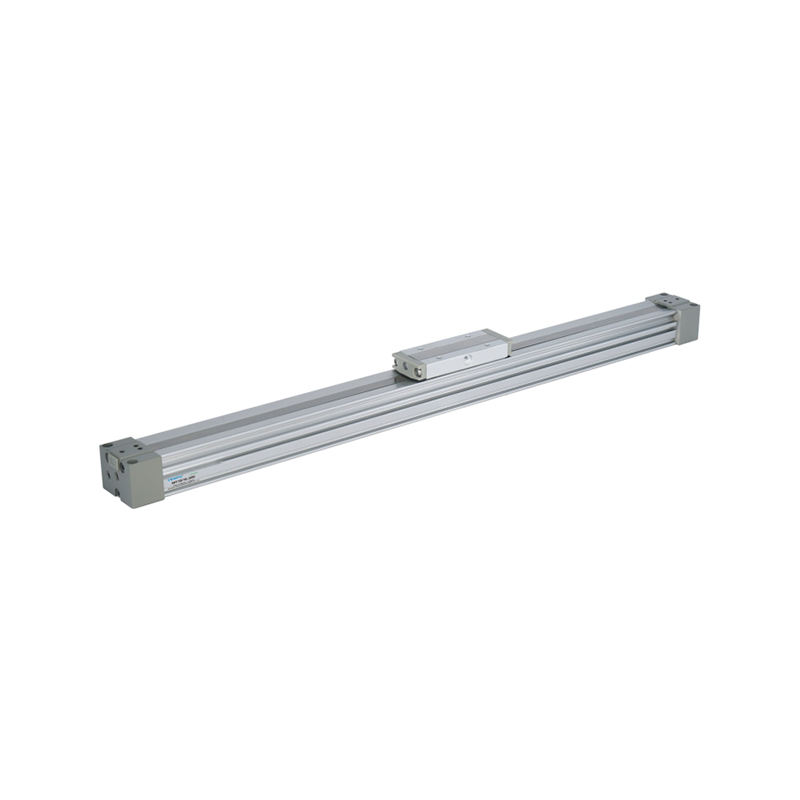
Compact long-stroke movement finds its match in Rodless Air Cylinders, pneumatic linear actuators purpose-built for industrial automation systems where space runs tight. Installation length shrinks considerably once the external piston rod gets eliminated from the design, with the carriage instead traveling directly along the cylinder body to accomplish the same task. Product transfer, pushing, positioning, sorting, indexing, and horizontal material handling all fall within the range this structure handles well. Packaging machinery, automated assembly equipment, conveyor systems, electronics manufacturing, automotive component production, and pneumatic transfer modules make up the typical settings where rodless cylinders earn their keep. Bore size, stroke length, working pressure, load weight, moment force, mounting direction, speed control, cushioning, and sensor feedback all deserve consideration once proper selection becomes the goal. Practical structure design, stable machining capability, and flexible specification support come together in the Rodless Air Cylinder and China Air Cylinder solutions Feishengya provides, aimed squarely at reliable pneumatic motion control for applications where space runs short and stroke length runs long.
Zhejiang Feishengya Pneumatic Components Co., Ltd.
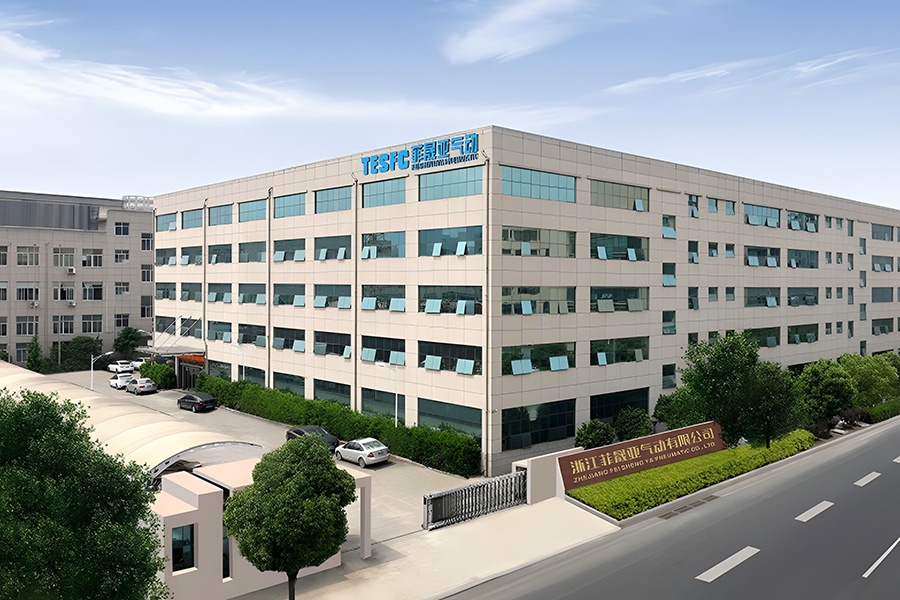
Zhejiang Feishengya Pneumatic Components Co., Ltd. is a pneumatic component enterprise that integrates scientific R&D, production and processing, operation and sales, technical services, import and export trade, and personnel training. It specializes in the production, processing, and sales of pneumatic components such as cylinders, solenoid valves, and Rodless Air Cylinder.
The company has always adhered to serving society with practical quality, high-quality service, comprehensive technology, and reasonable prices, and is committed to striving to create a "Chinese famous brand".
Our company has nearly a hundred advanced processing pieces of equipment. There are currently 120 employees, including over 20 professional and technical personnel, with an annual production capacity of 500,000 pieces (sets) of various components. We have advanced production processes, complete testing methods and equipment, and a high-quality workforce. We organize production and sales with a practical and innovative concept, and have passed ISO9001 international quality management system certification. We use CAD, SOLIDWORKS, and ERP for engineering design and enterprise management. Continuously increasing product development efforts and investment, continuously upgrading and improving equipment and products to meet customer needs with higher cost-effectiveness, and providing high-performance products and convenient and fast services to new and old users anytime, anywhere.
China Air Cylinder manufacturer - Feishengya Pneumatic adheres to the principles of "strict production, scientific management, continuous improvement, and stable quality with a rigorous and down-to-earth work style, a pioneering spirit of self-improvement, an honest and down-to-earth management style, and first-class production technology. Relying on the increasingly mature market system and flexible industry mechanisms, we adhere to the development path of technology oriented, outward oriented, and comprehensive, and provide more and better quality services for various industries.
All employees of Zhejiang Feishengya Pneumatic Components Co., Ltd. sincerely welcome friends from all industries to visit, exchange ideas and cooperate with us.
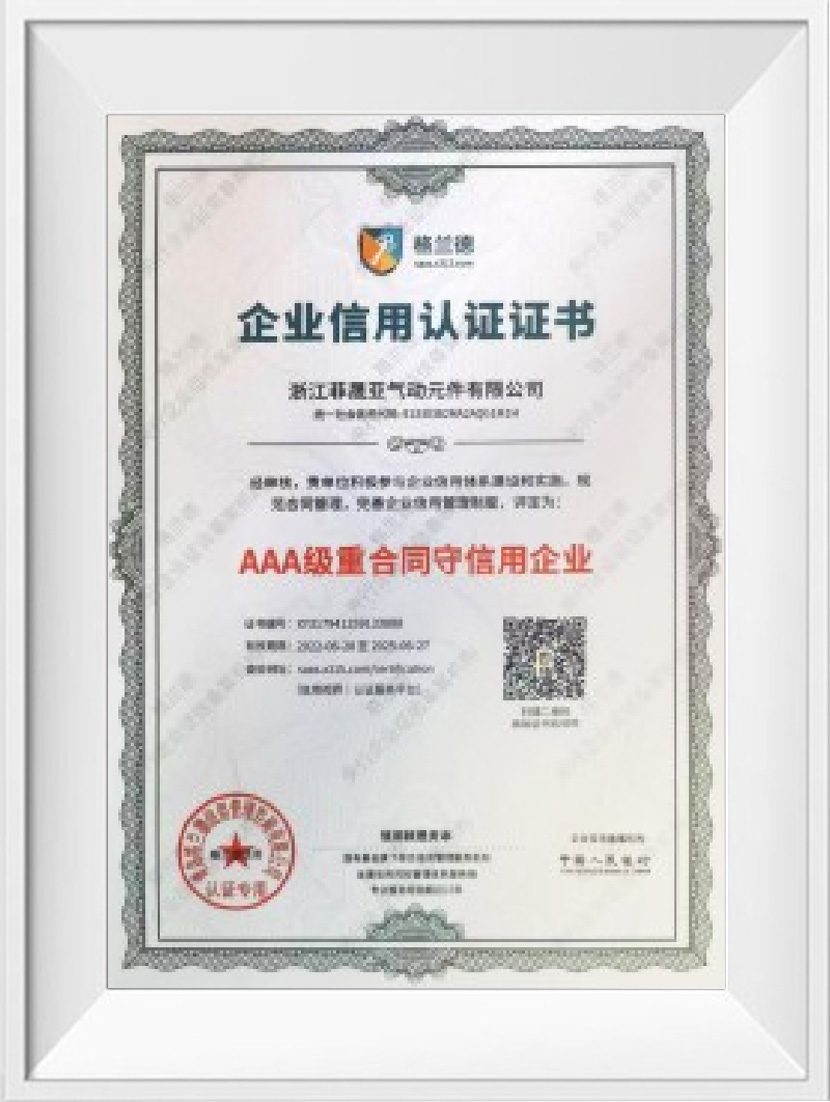
Certificate
Certificate-cs
Certificate-cs
Certificate-cs
Our LATEST NEWS

2026-10-02

2026-09-25
2026-09-18
Straight-line motion without an external piston rod is exactly what a Rodless Air Cylinder delivers as a pneumatic linear actuator. Rather than pushing a rod out beyond the cylinder body, this design puts the internal piston to work driving an external carriage or slide along the full length of the cylinder. Long stroke movement becomes achievable through this structure while installation space stays notably smaller than what a conventional rod-type air cylinder would demand.
Automation equipment manufacturers, mechanical engineers, pneumatic component distributors, equipment integrators, and OEM/ODM project teams all find something useful in the Rodless Air Cylinder and China Air Cylinder solutions Feishengya provides — solutions built around saving installation space, achieving long-stroke linear motion, and simplifying pneumatic actuator selection along the way. General cylinder models mark the limit for plenty of suppliers out there, but Feishengya pushes further into practical application matching, backed by genuine pneumatic component experience, stable machining capability, and specification options flexible enough to bend around each project's actual needs.
Compressed air turns into linear motion through a piston tucked inside the cylinder barrel — that's the working principle behind a Rodless Air Cylinder, a category of pneumatic actuator built around this exact mechanism. An external carriage picks up that motion and travels along the body of the cylinder, connecting directly with the load or machine mechanism it's meant to drive.
Where the rodless design parts ways with a standard air cylinder comes down to one key detail: no external piston rod extends outward. A standard cylinder needs room set aside for that rod to reach its full extension, but a rodless design keeps the movement contained along the cylinder body itself, opening the door to longer travel within a footprint that stays genuinely compact.
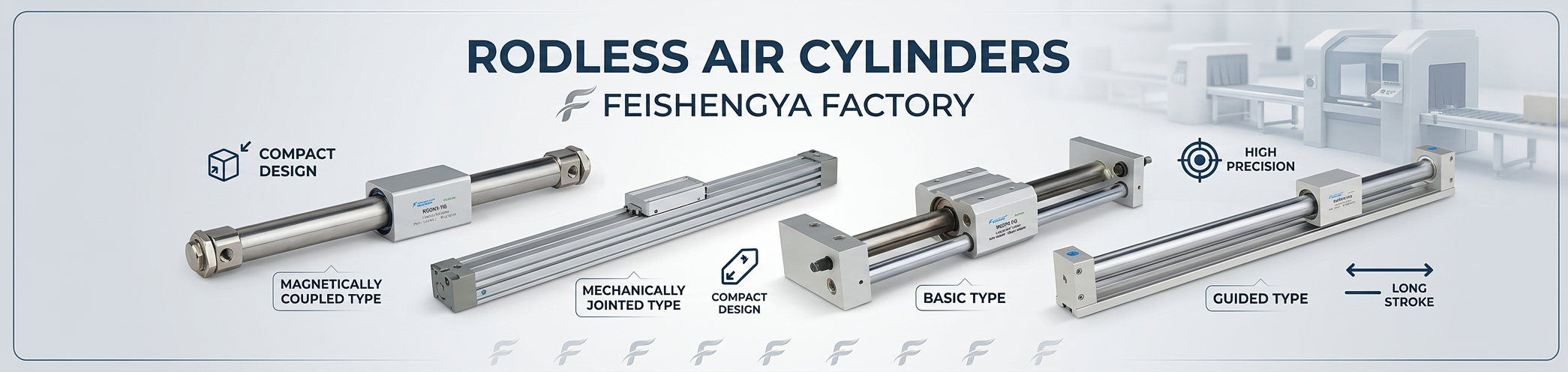
A typical Rodless Air Cylinder includes:
Transfer, pushing, positioning, indexing, and sliding actions all become achievable in automated systems once this structure comes into play.
Long-stroke linear actuator duties fall to the Rodless Air Cylinder within a pneumatic system, taking in compressed air controlled by valves and turning that air pressure into carriage movement.
The operating process typically unfolds like this:
Working alongside a Rodless Air Cylinder, you'll typically find:
Several common motion problems in automation equipment find their answer through the rodless structure:
A cleaner, more efficient mechanical arrangement tends to emerge from a Rodless Air Cylinder in exactly those situations where a standard cylinder would otherwise eat up excessive installation space.
Motion transmission method, guide structure, load support, and sensing function all offer angles for dividing Rodless Air Cylinders into distinct types. Load weight, stroke length, speed, installation direction, and accuracy requirements together shape which type ends up being the right fit.
A physical connection between the internal piston and the external carriage defines how a mechanical rodless cylinder gets the job done. Transfer, pushing, and positioning tasks that call for direct force transmission tend to lean on this type most often.
Sealing structure, carriage load, speed, and installation straightness all deserve a close look when a mechanical rodless cylinder is on the table. Additional support to maintain stability tends to become necessary once stroke length stretches out.
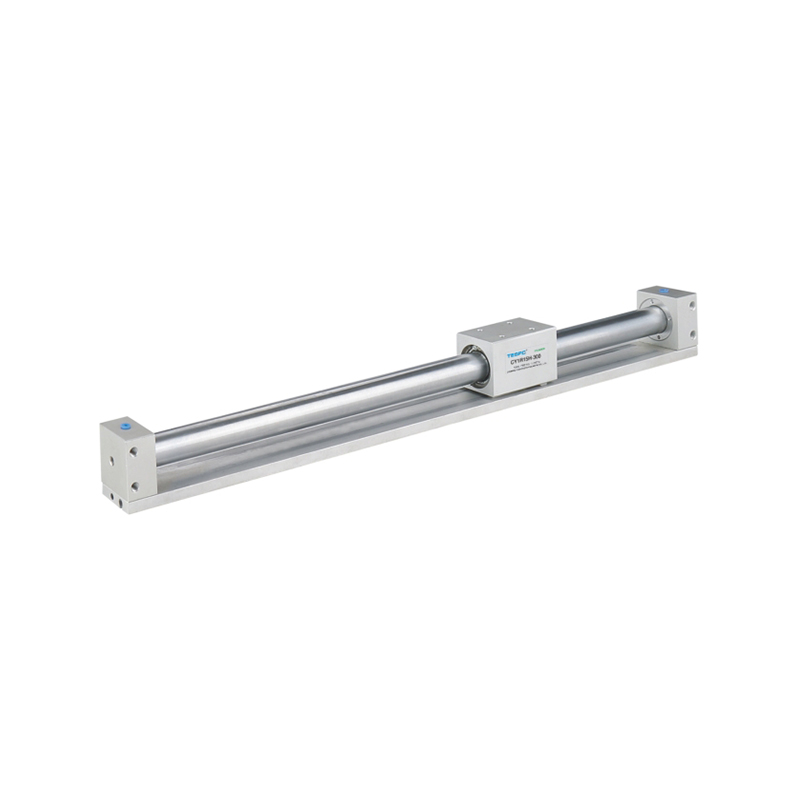
Magnetic coupling links the internal piston and the external carriage in this type, sidestepping the need for an open slot in the cylinder body that mechanical connection would otherwise require. Sealing tends to improve in suitable applications as a direct result.
Magnetic coupling force calls for careful checking every time. Should load, acceleration, or impact push past what the coupling can handle, the carriage risks losing synchronization with the internal piston.
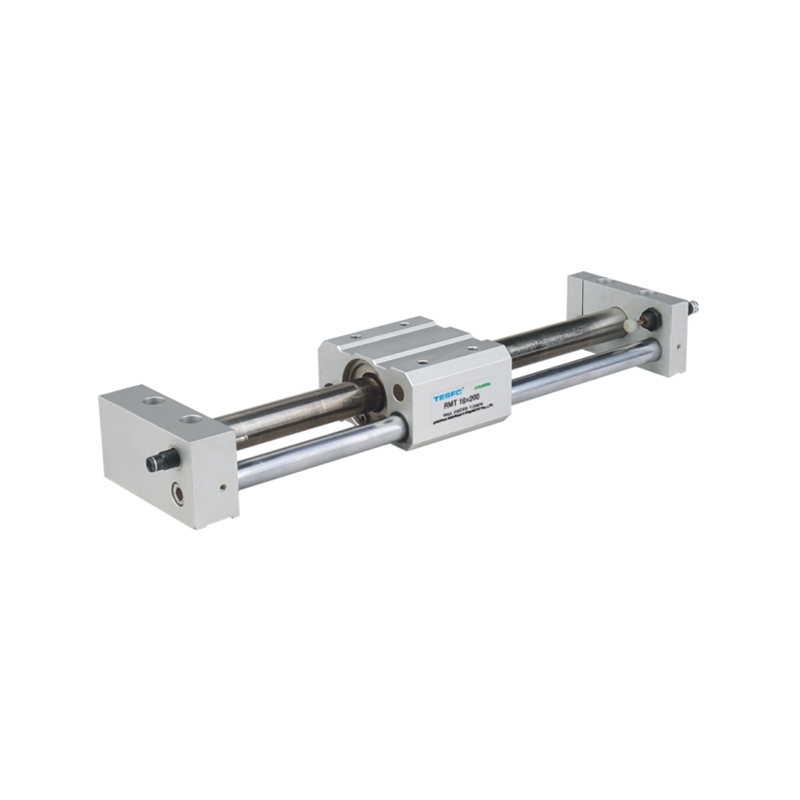
Guide rails or linear bearing support merge directly with the cylinder body in a guided rodless cylinder. Mounting the load right on the carriage, or handling offset load and moment load, both point toward this type as the better fit.
Allowable moment load, carriage rigidity, guide rail capacity, and mounting surface flatness all warrant a review before installation gets underway.
Pneumatic drive meets a guided table structure in this type, resulting in a compact pneumatic linear module well-suited to positioning, shifting, and transfer operations.
Repeatability, load balance, speed, and end cushioning all deserve evaluation against the actual equipment cycle when a slide table structure is under consideration.
Stroke length alone doesn't tell the full story when a suitable Rodless Air Cylinder needs picking out. Force, load type, mounting direction, speed, cushioning, and system control requirements all deserve a place on the engineer's checklist.
Output force of the cylinder traces directly back to bore size. Higher thrust comes with a larger bore under the same working pressure, though air consumption climbs right along with it.
Bore size selection should weigh:
Stable movement without wasted air consumption tends to follow naturally once bore size gets matched correctly to the task at hand.
Longer stroke movement packed into a compact installation length ranks among the standout advantages a Rodless Air Cylinder brings to the table.
Stroke selection calls for checking:
Cylinder straightness, vibration, and carriage load stability all merit close attention once long stroke applications enter the picture.
Load capacity is not only about weight. For rodless cylinders, the position of the load on the carriage is also important. An offset load may create moment force and affect movement accuracy or service life.
Important load factors include:
The following table gives a practical selection reference:
| Load Condition | Recommended Type | Selection Note |
|---|---|---|
| Light load and clean motion | Magnetic rodless cylinder | Check magnetic coupling force |
| Medium load transfer | Mechanical rodless cylinder | Confirm sealing and carriage capacity |
| Offset load or moment load | Guided rodless cylinder | Review guide rail load rating |
| Precision table movement | Slide table rodless cylinder | Check repeatability and rigidity |
A guided structure is usually more suitable when the load is directly installed on the carriage.
Rodless cylinders are often used for long-distance movement, so speed control is important. Excessive speed can cause impact, vibration, and positioning instability.
Recommended considerations:
For high-speed transfer, cushioning performance and mechanical stopper design should be evaluated carefully.
Many Rodless Air Cylinder systems require position confirmation. Magnetic switches can be used to detect carriage or piston position and provide signals to a PLC or control system.
Position feedback supports:
Sensor position should be adjusted during commissioning to ensure stable signal output.
Compact long-stroke movement, stable transfer, and repeatable pneumatic actuation come together across a wide range of automation systems, and Rodless Air Cylinders find themselves put to work in exactly these settings.
Limited installation space paired with a need for long, repeatable linear movement describes packaging equipment fairly well. Product pushing, alignment, transfer, and sorting all fall within reach of rodless cylinders in this setting.
Common uses include:
Longer motion paths become arrangeable without stretching the machine frame excessively, thanks to the compact structure equipment designers get to work with here.
Fixtures get driven, tooling plates get moved, workpieces get shifted, and station-to-station transfer gets supported once Rodless Air Cylinders enter automated assembly systems.
Common uses include:
Production lines where components need to travel between different process positions find real value in the long-stroke capability these cylinders bring.
Conveyor modules, sorting devices, and transfer systems turn to rodless cylinders often, with the external carriage connecting directly to pushing plates, brackets, or moving platforms.
Common uses include:
Guided rodless cylinders tend to win out as the preferred choice once heavier or offset loads enter the equation.
Controlled movement and low vibration packed into compact actuators sum up what electronics equipment typically demands. Small-load transfer and fixture motion in electronic assembly and inspection systems fall well within what rodless cylinders can support.
Common uses include:
Cleanliness, load, and precision requirements guide the choice between magnetic or guided structures in this context.
Part transfer, fixture movement, and process positioning all gain assistance from rodless cylinders in automotive component production. Repetitive production equipment benefits noticeably from their long-stroke design.
Common uses include:
Larger load or moment force in an application tends to point selection toward guided models.
Air cylinders, solenoid valves, fittings, and related pneumatic products all fall within what Feishengya manufactures for industrial automation systems. Long-stroke movement, compact installation, and reliable pneumatic control in practical machine environments define the design intent behind the Rodless Air Cylinder category specifically.
External rod extension space becomes unnecessary once the rodless design takes over. Longer movement distances within a shorter installation length open up as a result, a detail that matters considerably in compact automation equipment.
Repeated linear motion with controlled speed and reduced vibration comes through low-friction movement, proper sealing design, and stable carriage travel working together.
Pushing plates, fixtures, brackets, or transfer mechanisms can all connect directly to the external carriage. Offset load or higher moment force applications find guided options ready and waiting.
Working conditions dictate which structure makes the most sense — mechanical rodless cylinders, magnetic rodless cylinders, guided rodless cylinders, and slide table structures each cover different ground.
Solenoid valves, speed controllers, magnetic sensors, air preparation units, fittings, and silencers all pair readily with the cylinder, easing integration into common pneumatic systems.
Pneumatic component development, production processing, technical service, and international market support come together under one roof at Zhejiang Feishengya Pneumatic Components Co., Ltd. Experience built around China Air Cylinder products and related pneumatic components positions Feishengya to support specification matching, process control, and application-oriented product improvement.

Phone: +86-15957736756
E-mail: [email protected]
Add: No.7, Yongxing Second Road, Chengdong Industrial Functional Zone, Chengdong Subdistrict, Yueqing City, Zhejiang Province, P.R.China
Copyright © Zhejiang Feishengya Pneumatic Components Co., Ltd. All Rights Reserved.
 Rodless Air Cylinder Factory
 English
 русский
 عربى
عربى Español