/

/

Search
Category
Hot Products
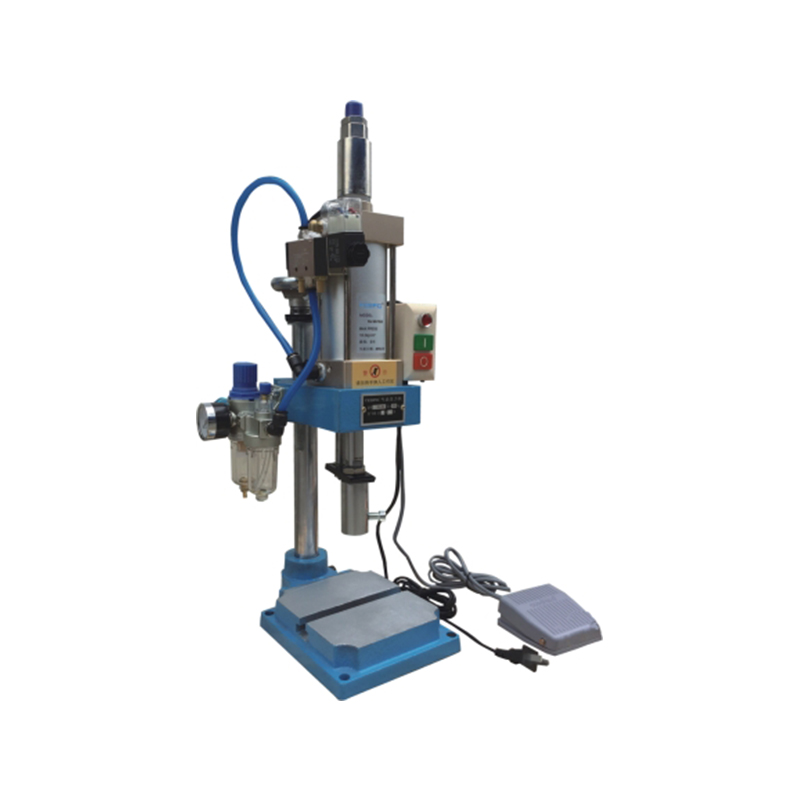
Compressed air does the driving here — a Pneumatic Press converts that air pressure into linear force through a pneumatic cylinder, and the result is a device well suited to precision assembly, riveting, punching, bending, crimping, marking, and light forming work. Clean operation, adjustable control, repeatable stroke movement — these aren't separate selling points so much as one connected outcome of how the mechanism works. Set next to hydraulic equipment, a Pneumatic Press tends to come out ahead on structure simplicity, maintenance complexity, and how easily it slots into workstations or automated production lines.
Feishengya builds its Pneumatic Press solutions with automation equipment manufacturers, mechanical engineers, pneumatic component distributors, and OEM/ODM projects in mind. Pneumatic component manufacturing experience, solid engineering design tools, and flexible configuration capability — these are what let Feishengya deliver stable pressing performance across electronics assembly, automotive components, metal processing, plastic parts, and industrial fixture systems.
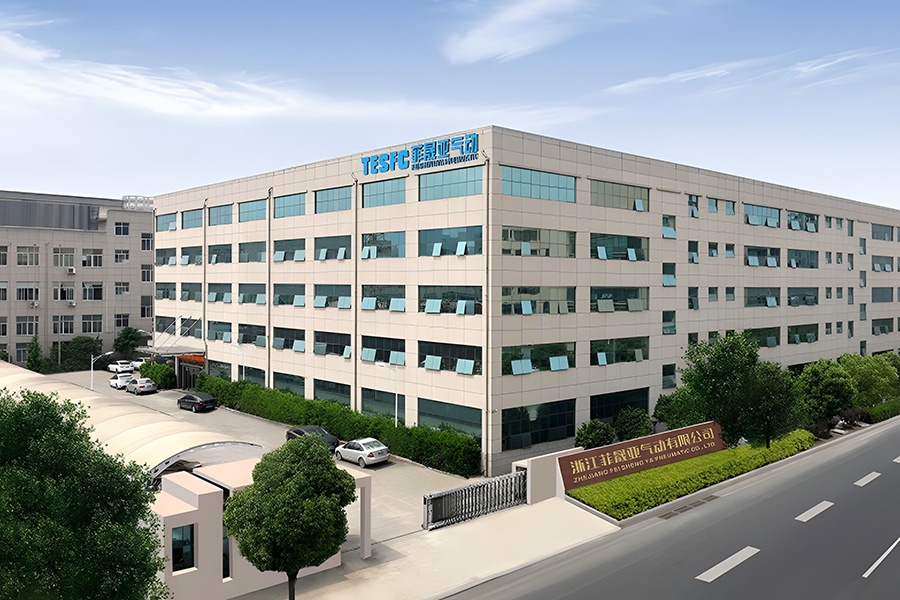
Zhejiang Feishengya Pneumatic Components Co., Ltd.
Zhejiang Feishengya Pneumatic Components Co., Ltd. is a pneumatic component enterprise that integrates scientific R&D, production and processing, operation and sales, technical services, import and export trade, and personnel training. It specializes in the production, processing, and sales of pneumatic components such as cylinders, solenoid valves, and Pneumatic Press.
The company has always adhered to serving society with practical quality, high-quality service, comprehensive technology, and reasonable prices, and is committed to striving to create a "Chinese famous brand".
Our company has nearly a hundred advanced processing pieces of equipment. There are currently 120 employees, including over 20 professional and technical personnel, with an annual production capacity of 500,000 pieces (sets) of various components. We have advanced production processes, complete testing methods and equipment, and a high-quality workforce. We organize production and sales with a practical and innovative concept, and have passed ISO9001 international quality management system certification. We use CAD, SOLIDWORKS, and ERP for engineering design and enterprise management. Continuously increasing product development efforts and investment, continuously upgrading and improving equipment and products to meet customer needs with higher cost-effectiveness, and providing high-performance products and convenient and fast services to new and old users anytime, anywhere.
Pneumatic Press manufacturer - Feishengya Pneumatic adheres to the principles of "strict production, scientific management, continuous improvement, and stable quality with a rigorous and down-to-earth work style, a pioneering spirit of self-improvement, an honest and down-to-earth management style, and first-class production technology. Relying on the increasingly mature market system and flexible industry mechanisms, we adhere to the development path of technology oriented, outward oriented, and comprehensive, and provide more and better quality services for various industries.
All employees of Zhejiang Feishengya Pneumatic Components Co., Ltd. sincerely welcome friends from all industries to visit, exchange ideas and cooperate with us.
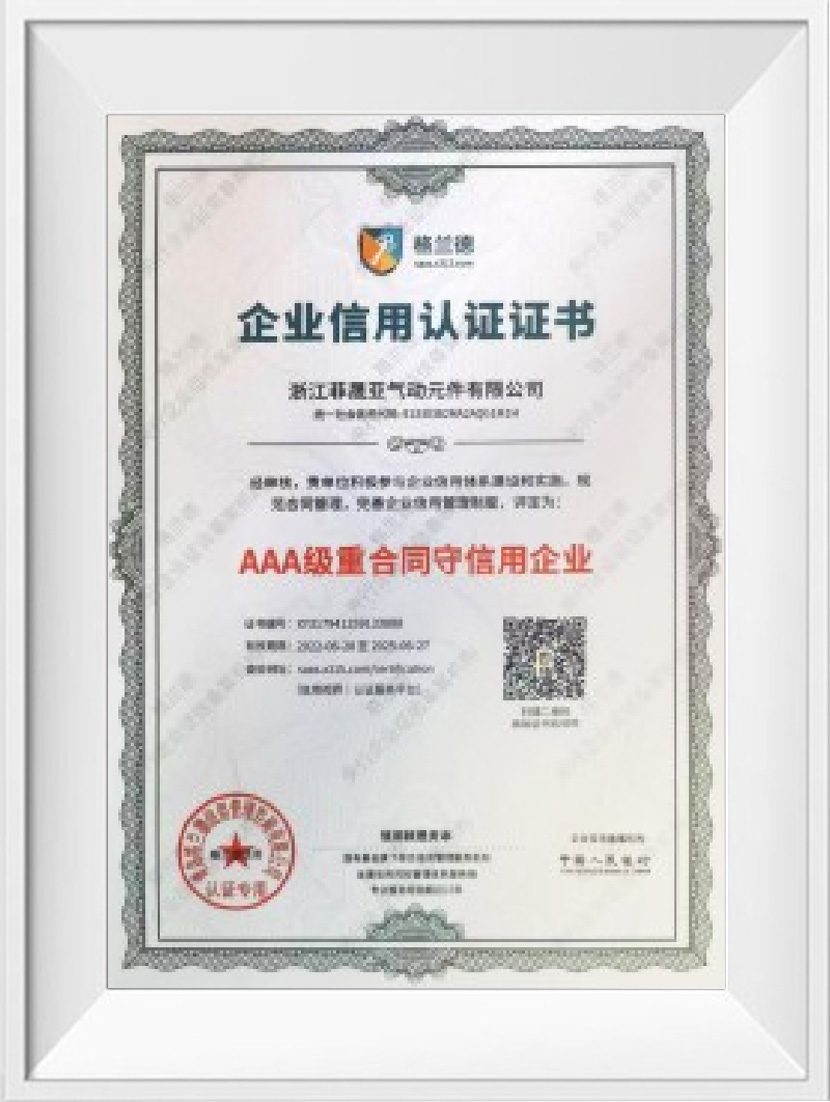
Certificate
Certificate-cs
Certificate-cs
Certificate-cs
Our LATEST NEWS

2026-10-02

2026-09-25
2026-09-18
Feishengya delivers Pneumatic Press solutions to automation equipment manufacturers, mechanical engineers, pneumatic component distributors, and OEM/ODM projects, helping them cut down on machine space, installation complexity, operating energy, and maintenance effort while still achieving stable pressing, riveting, punching, bending, and assembly performance. General equipment suppliers offering only standard press structures fall short here — Feishengya stands apart through genuine pneumatic component manufacturing experience, flexible configuration support, ISO9001 quality management, and practical engineering capability tailored for industrial automation applications.
A Pneumatic Press is a compressed-air-driven device built to apply controlled linear force across manufacturing processes. It fits naturally wherever repeatable motion, adjustable pressure, clean operation, and compact installation are required. Set against hydraulic press equipment, a pneumatic press generally offers a simpler structure, a cleaner working medium, faster response, and smoother integration into production workstations.
For companies searching for China Pneumatic Press solutions, price or appearance alone rarely tells the full story. What matters more comes down to output force, stroke accuracy, frame rigidity, cylinder quality, valve response, safety design, maintenance access, and compatibility with automated tooling.
Compressed air powers a Pneumatic Press, an industrial pressing machine that relies on a pneumatic cylinder to turn air pressure into mechanical force, driving the press ram or tooling head through each pressing action.
The basic working process stays simple and reliable throughout:
Pressure and stroke can often be adjusted, which is exactly why a Pneumatic Press suits applications calling for repeatable light-to-medium pressing force rather than heavy forming force.
A Pneumatic Press is commonly selected when users need clean operation, simple control, and fast actuation.
| Press Type | Driving Method | Typical Characteristics |
|---|---|---|
| Pneumatic Press | Compressed air | Clean, compact, fast response, suitable for light-to-medium force |
| Hydraulic Press | Hydraulic oil pressure | High force capacity, slower response, requires hydraulic maintenance |
| Mechanical Press | Motor and mechanical transmission | High speed, fixed stroke behavior, suitable for continuous stamping tasks |
In many assembly and workstation applications, the Pneumatic Press offers a balanced solution between operating simplicity and controlled pressing performance.
Press structures, control methods, force ranges — production tasks vary widely across all three, and choosing the right type pays off directly in process stability and equipment integration.
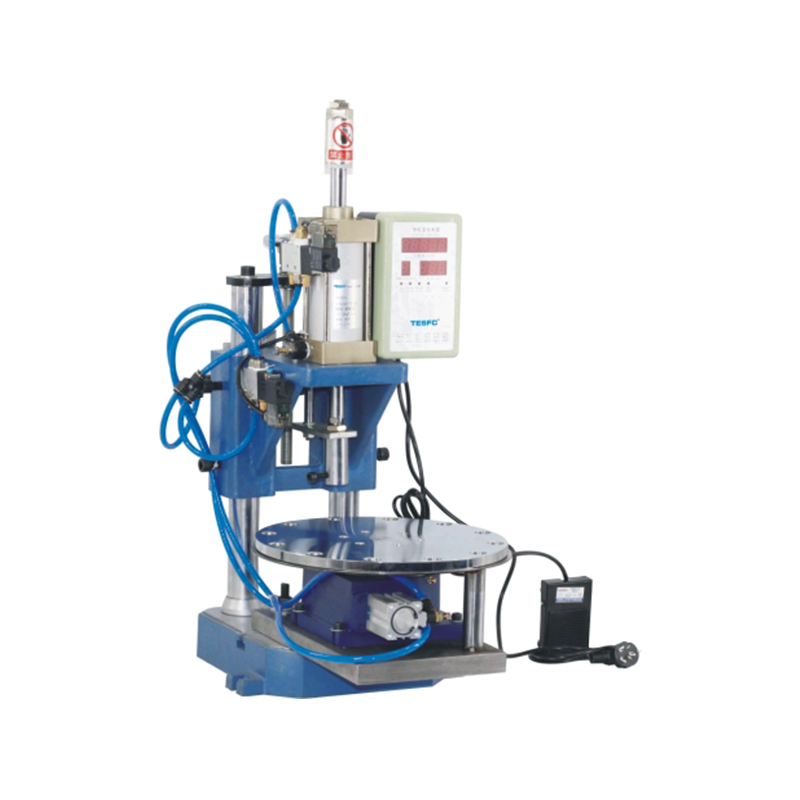
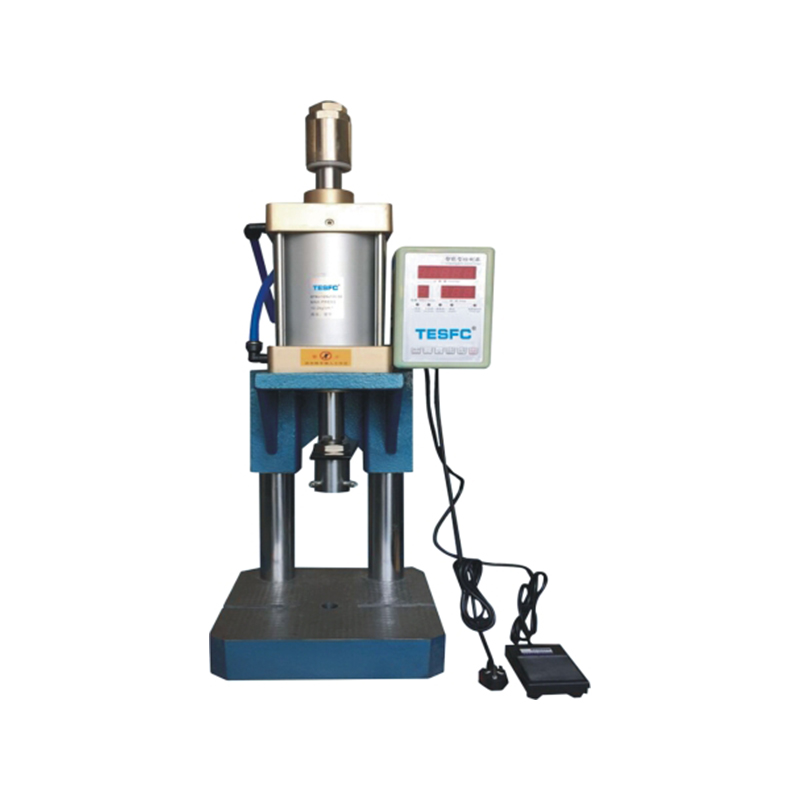
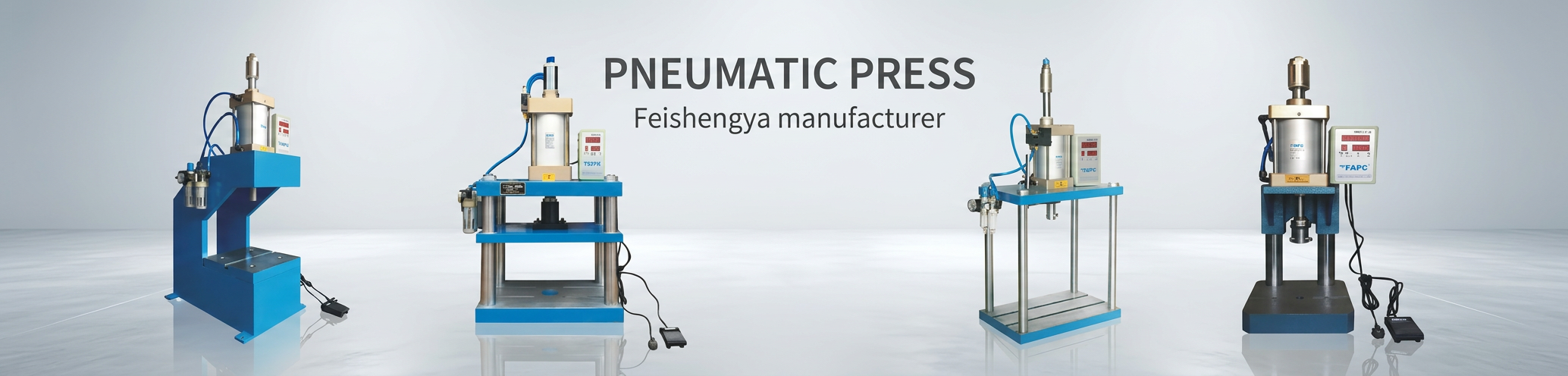
Compact enough for workstation installation, a bench-top Pneumatic Press shows up frequently in small part assembly, electronics manufacturing, component fitting, and manual production stations.
Typical features include:
Factories and workshops running repeated pressing tasks without needing a large machine frame find this type particularly useful.
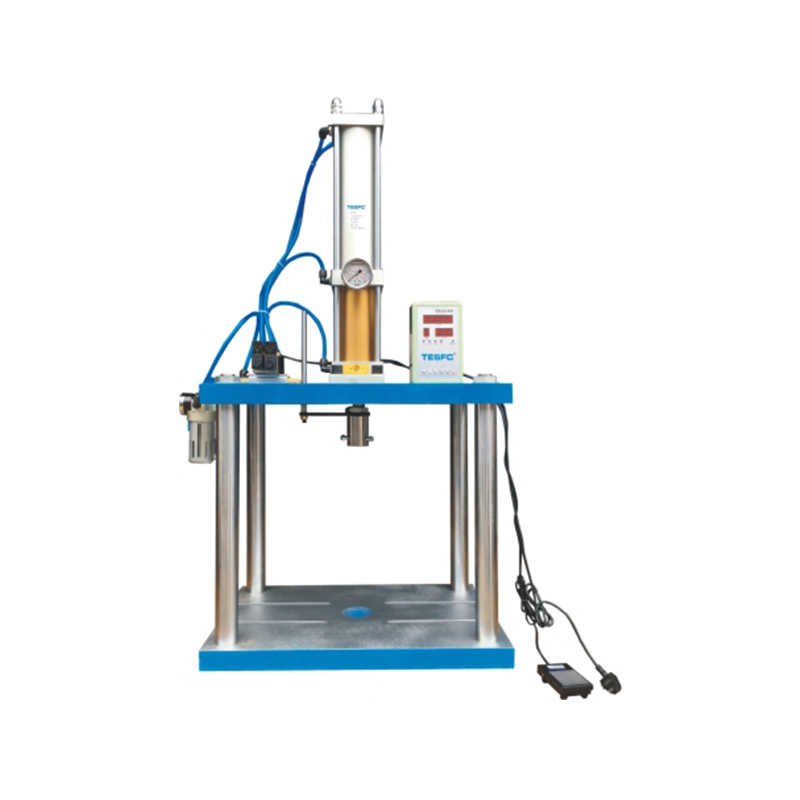
A larger frame and stronger structural support define the floor-standing pneumatic press, built for applications requiring longer stroke, larger tooling, or higher working clearance.
Common uses include:
Better stability for larger-dimension parts comes naturally from the floor-standing structure.
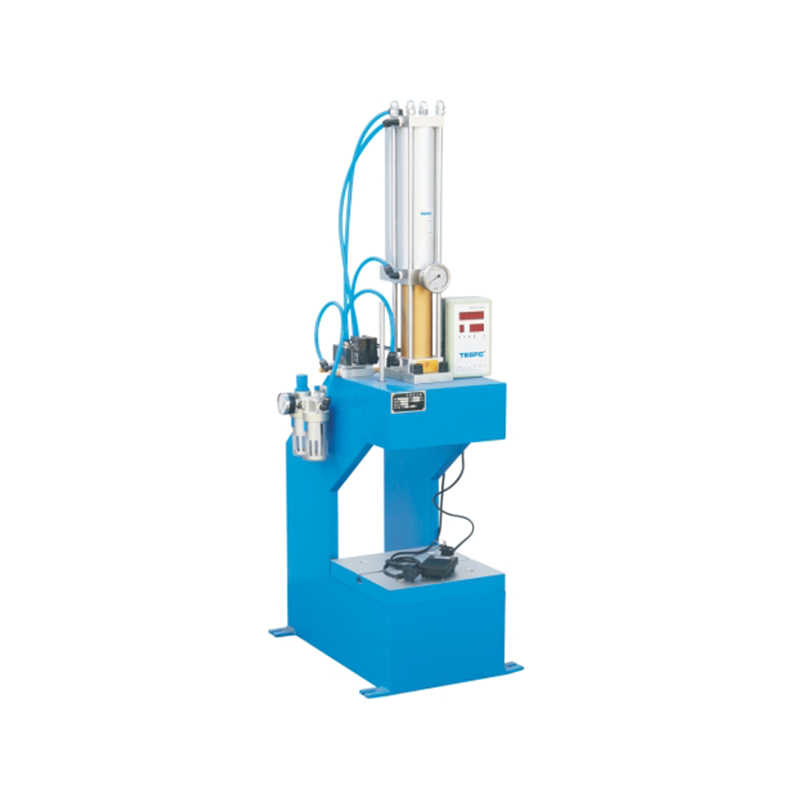
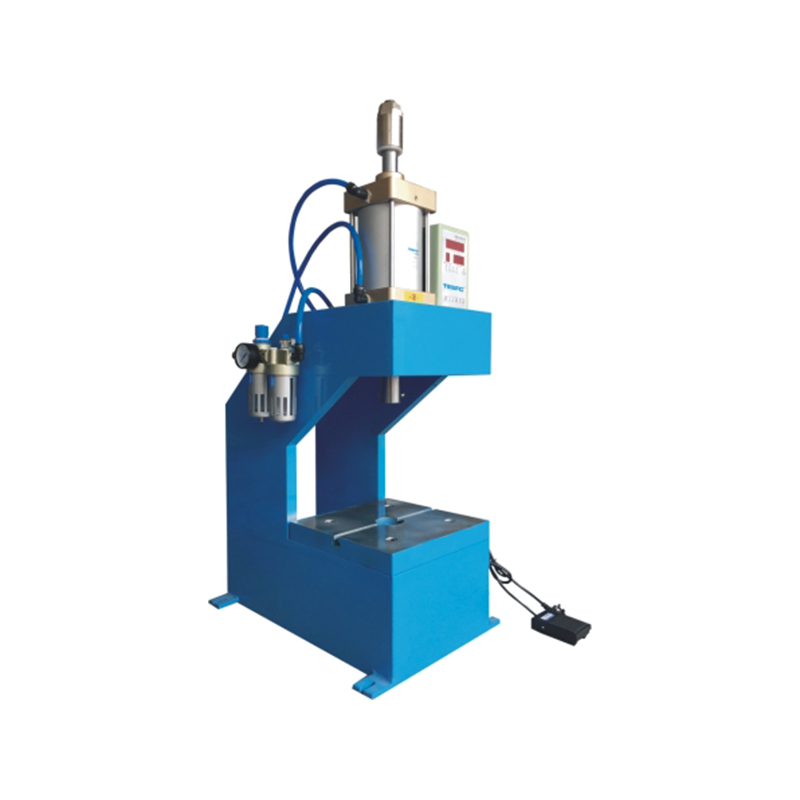
Open access from the front and sides is the defining trait of a C-frame design, making it a natural fit for loading and unloading parts manually or with simple fixtures.
Key benefits include:
General industrial workstations lean heavily on C-frame presses thanks to this practical structure.
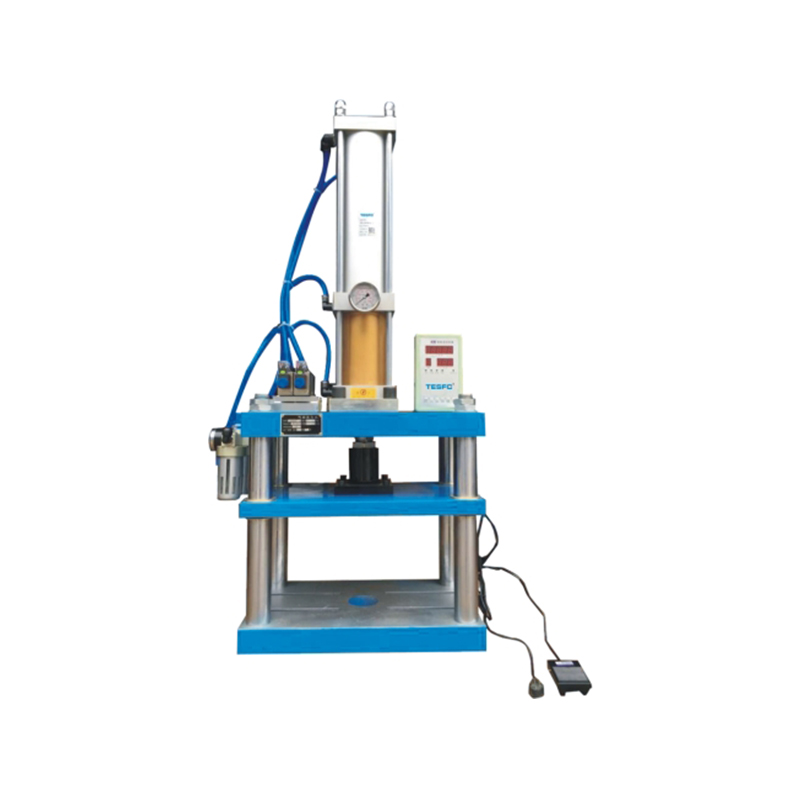
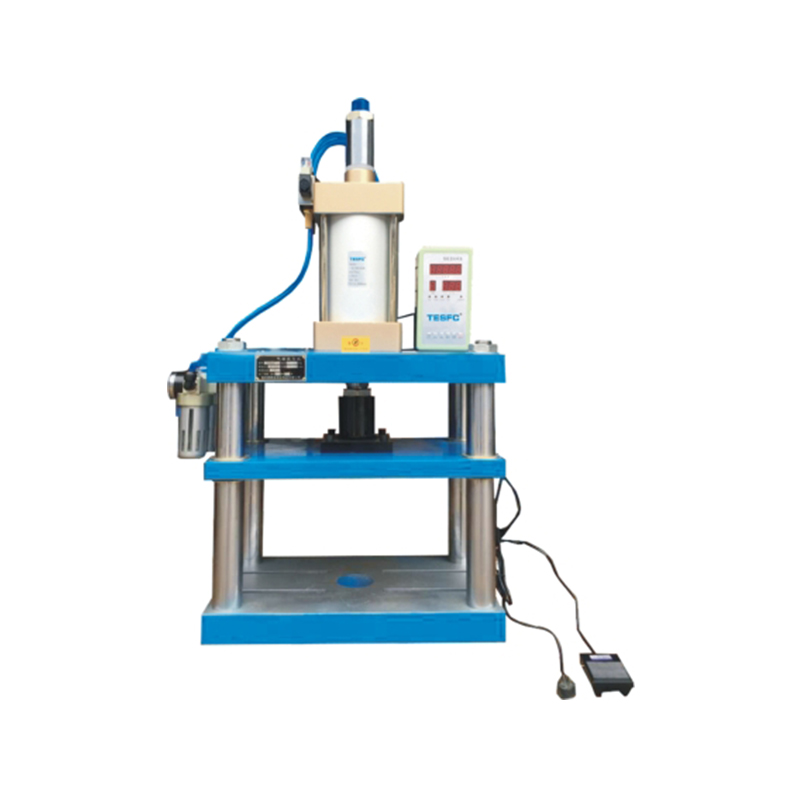
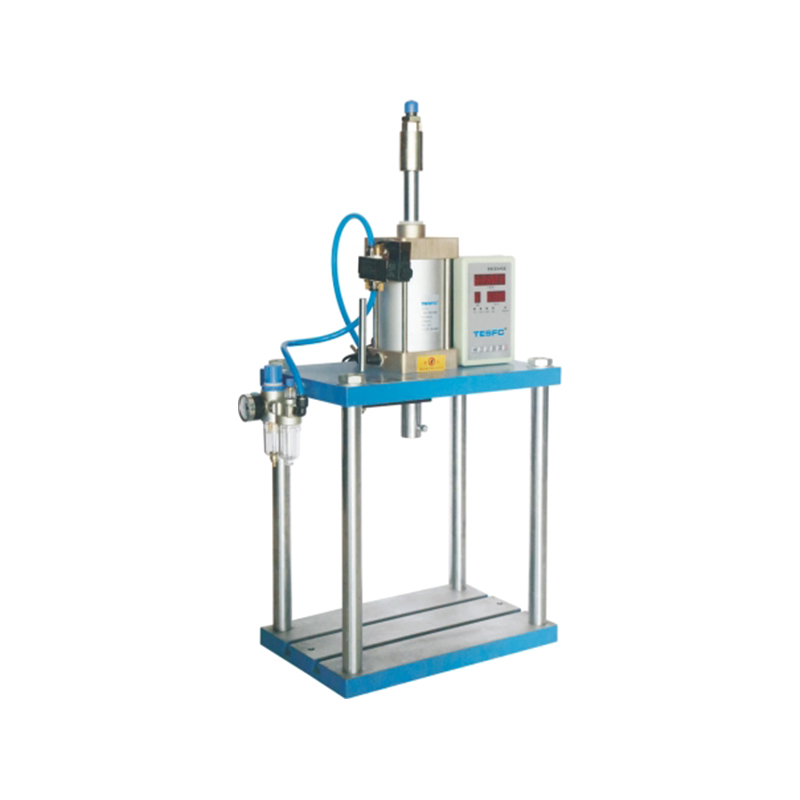
Improved guiding stability and force distribution set the four-column structure apart, well suited to pressing applications where alignment and parallel movement carry real weight.
Typical applications include:
Workpiece alignment directly affecting product quality is usually the deciding factor behind choosing this type.
Hand valve, foot pedal, or two-hand control all work fine for manual-control models, which suit flexible production tasks, repair stations, and small-batch process work well.
Automated equipment and production lines call for PLC-controlled pneumatic presses, which pair readily with sensors, solenoid valves, counters, safety guards, and process monitoring devices.
This structure proves useful for:
Clean power source, straightforward control, adaptable structure — a Pneumatic Press earns its reputation on all three fronts, fitting especially well into production environments that need repeated pressing actions without the complexity of hydraulic systems.
Consistent stroke movement and adjustable pressure control come standard with pneumatic presses, giving operators and engineers a reliable way to hold stable process results across repetitive tasks.
Common processes include:
Uniform pressure requirements on certain parts respond well to proper pneumatic control, which cuts down variation and lifts assembly consistency.
Compressed air drives the press rather than hydraulic oil, so the main power medium never introduces oil leakage risk, workpiece contamination, or complex hydraulic maintenance concerns.
Clean operation carries particular weight in:
More compact than many hydraulic press systems, a Pneumatic Press slots easily into manual workbenches, semi-automatic stations, or automated production lines.
Its compact design helps save:
Manufacturers designing modular and flexible workstations find this trait genuinely useful.
Quick actuation and return movement come naturally to compressed air systems. Paired with suitable valves and regulators, the press supports efficient cycle times across repetitive assembly operations.
Cycle performance depends on:
Smooth, consistent operation follows naturally once the pneumatic circuit is properly matched.
Fewer maintenance steps are usually the norm for pneumatic press systems compared with hydraulic equipment. Routine maintenance tends to center on air quality, seals, fittings, lubrication conditions, and mechanical alignment.
Recommended checks include:
Service life stretches further and unexpected downtime shrinks whenever air preparation is handled well.
Multiple safety and control features can be built into pneumatic presses depending on machine design.
Common safety options include:
Safer operation across manual and automated production environments follows directly from these features.
Force, stroke, tooling, air supply, safety, production rhythm — selecting a Pneumatic Press means weighing all of these together rather than just picking a visible frame style.
Material, part structure, process type, tooling contact area, and assembly tolerance all shape the required force.
For example:
Incomplete processing tends to follow an undersized press, while an oversized press drives up cost, space use, and part damage risk.
Stroke length has to match the actual travel the process demands, and working height needs enough clearance for the workpiece, tooling, fixture, and operator access.
Important dimensions include:
Pressing accuracy and tool life both trace back to frame rigidity. A frame that flexes under load tends to produce uneven results and undercut tooling alignment.
C-frame structures offer convenient access, while four-column structures deliver improved alignment for precision compression.
Stable compressed air is what a Pneumatic Press really runs on, so the air system needs to supply enough pressure and flow for the selected cylinder.
Key pneumatic components include:
Repeatability improves and wear drops off once air preparation is handled well.
Manual, semi-automatic, and automated systems each call for different control designs — a workstation might rely on foot pedal operation, while an automated line typically needs solenoid valve control and PLC feedback.
For safety-sensitive operations, engineers should consider:
Process risk and local equipment standards should guide the safety design at every step.
Feishengya's work centers on pneumatic components and air-cylinder-related products built for industrial automation. When it comes to Pneumatic Press applications, a few things end up mattering more than people initially expect: how consistent the manufacturing is, how the cylinder actually performs, whether the seals hold up, and whether technical questions get answered clearly. That's because a press isn't a one-time-use device — it has to survive thousands of repeated cycles under real production conditions, and any weak point eventually shows up.
Cylinders and solenoid valves have been Feishengya's core products for a long time, and that kind of specialization tends to build a deeper, more practical grasp of things like air pressure behavior, sealing design, how a cylinder actually moves under load, and how different components need to work together as a system.
That background carries over directly into Pneumatic Press equipment, showing up in areas like:
Feishengya runs under ISO9001 certification, and in practice, that kind of quality system is what keeps dimensional accuracy, sealing performance, assembly consistency, and pressure stability from drifting over time.
A few of the areas this quality focus touches:
Design and management run through CAD, SOLIDWORKS, and ERP systems at Feishengya, paired with capable processing equipment and a technical team that can actually keep production steady while pushing new product development forward.
That combination makes it easier to accommodate different needs around:
No two Pneumatic Press applications look quite the same — the industry, the process, the layout, all of it shifts the requirements. Feishengya works within that reality, offering configurations that fit different machine layouts, control setups, and production environments rather than forcing everyone into the same mold.
Some of what's typically on the table:
Reliable compressed-air pressing equipment for assembly, riveting, punching, bending, and light forming — that's the core purpose behind a China Pneumatic Press from Feishengya, built for industrial users who need equipment they can count on. The value here doesn't stop at the press itself either; pneumatic system compatibility, manufacturing control, and practical configuration support all factor into the package.
Feishengya helps users achieve:
Smoother machine design and more predictable operation follow naturally from these factors for automation equipment manufacturers and OEM/ODM projects alike.

Phone: +86-15957736756
E-mail: [email protected]
Add: No.7, Yongxing Second Road, Chengdong Industrial Functional Zone, Chengdong Subdistrict, Yueqing City, Zhejiang Province, P.R.China
Copyright © Zhejiang Feishengya Pneumatic Components Co., Ltd. All Rights Reserved.
 Pneumatic Press Wholesaler
 English
 русский
 عربى
عربى Español