/

/

Search
Category
Hot Products
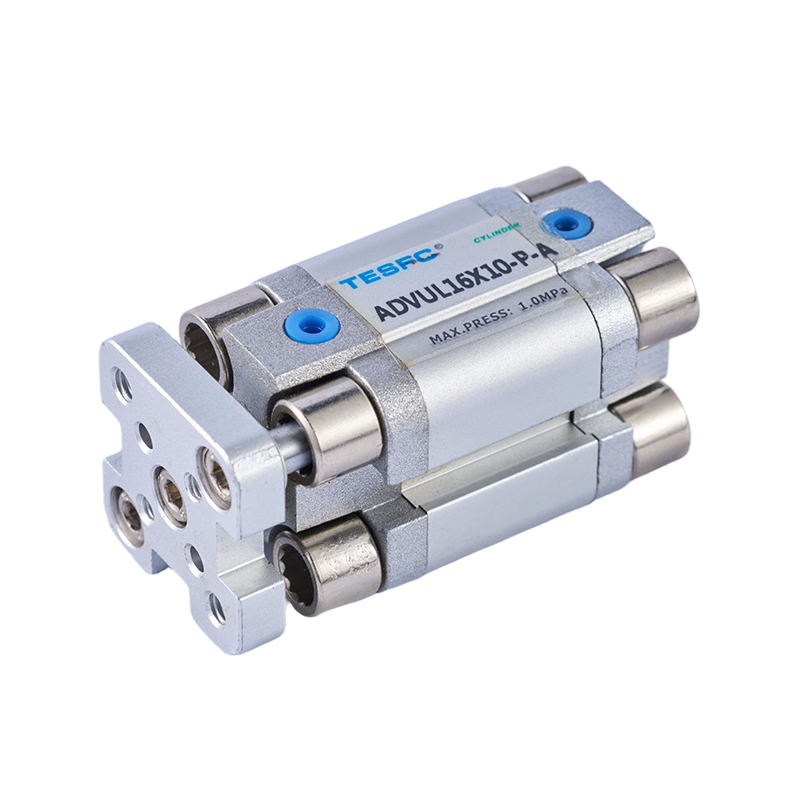
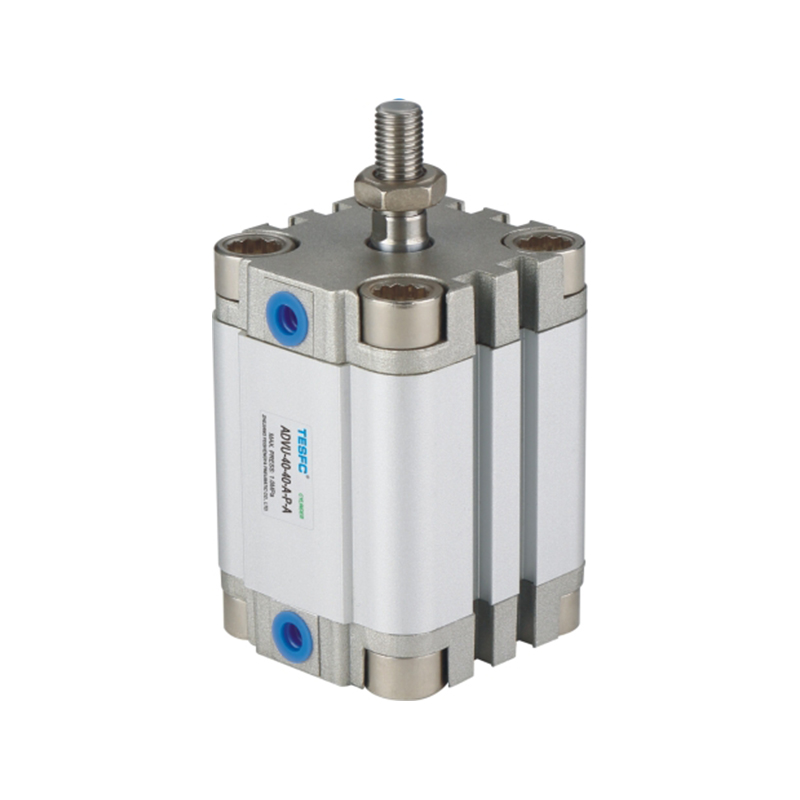
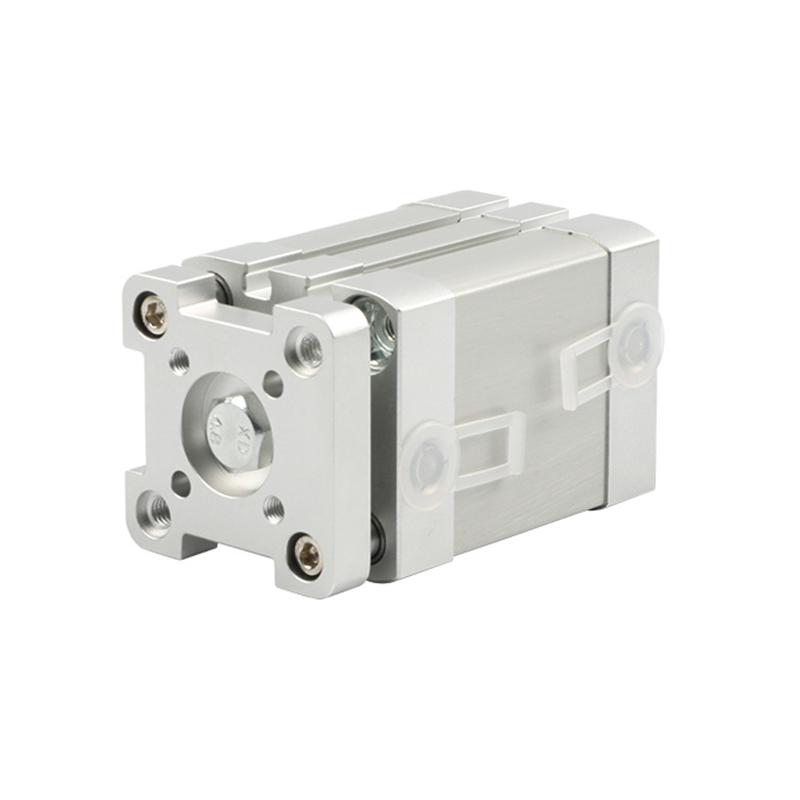
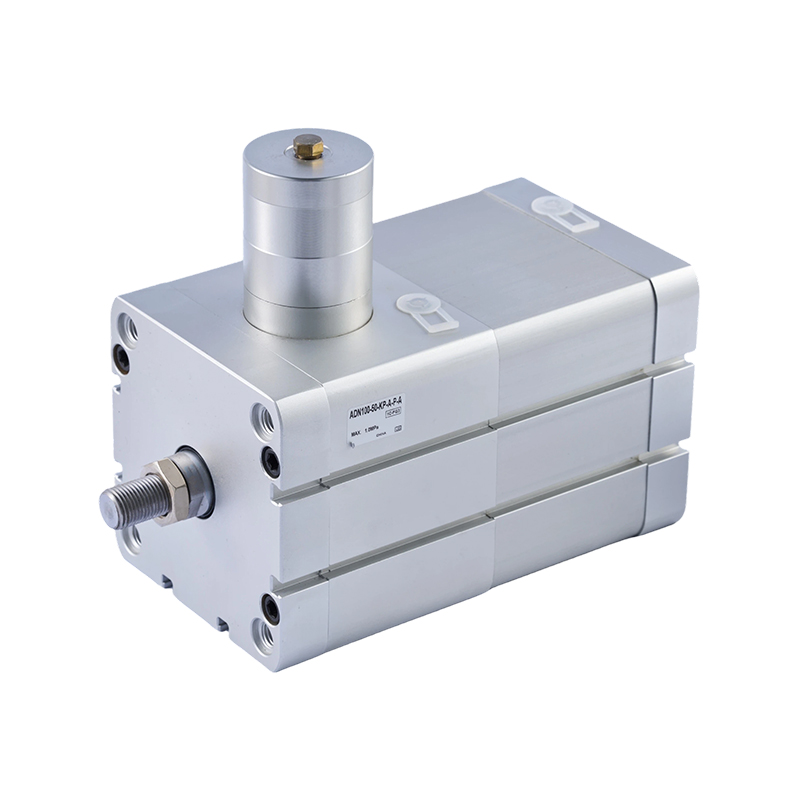
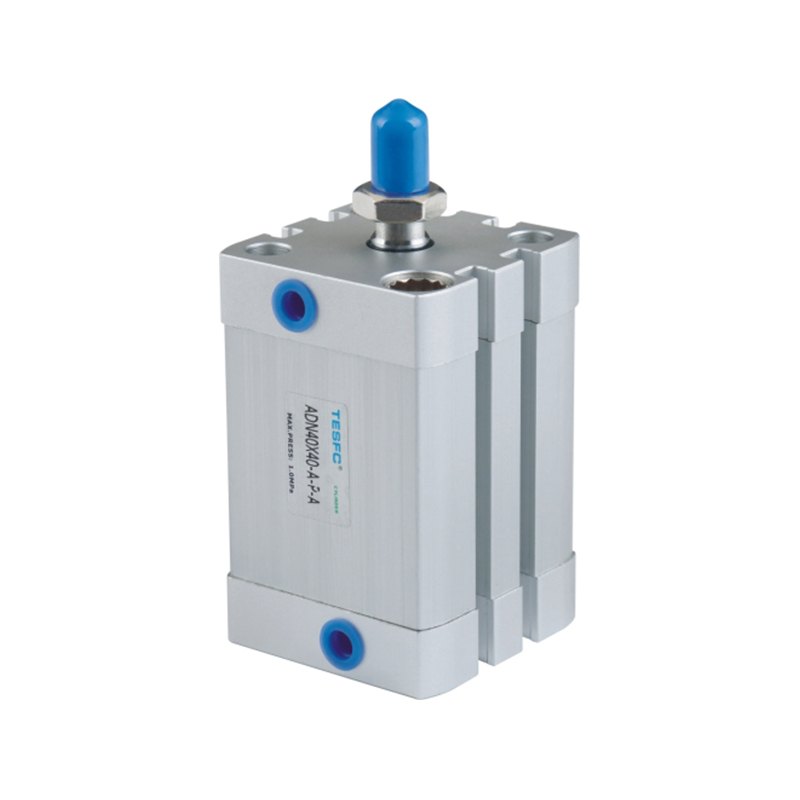
Limited installation space is exactly where a Thin Air Cylinder — often referred to as a Low Profile Air Cylinder — earns its place, serving as a compact pneumatic actuator built for controlled linear motion. Because the body height stays reduced, fitting one into automation modules, packaging machines, assembly fixtures, conveyor systems, testing equipment, or electronics production devices tends to go smoothly. Most of the work these cylinders handle falls into short-stroke territory: pushing, pressing, clamping, ejecting, stopping, lifting, positioning. Landing on the right selection means working through bore size, stroke length, working pressure, load direction, mounting method, speed control, air quality, and whether sensor feedback comes into play. Practical pneumatic motion control sits at the center of how Feishengya develops its Thin Air Cylinder products, with real focus placed on compact structure, sealing performance, smooth movement, installation convenience, and compatibility with valves, fittings, tubing, and control systems. Industrial equipment that needs space-saving installation paired with repeatable actuation across compact machine layouts tends to find exactly what it needs here.
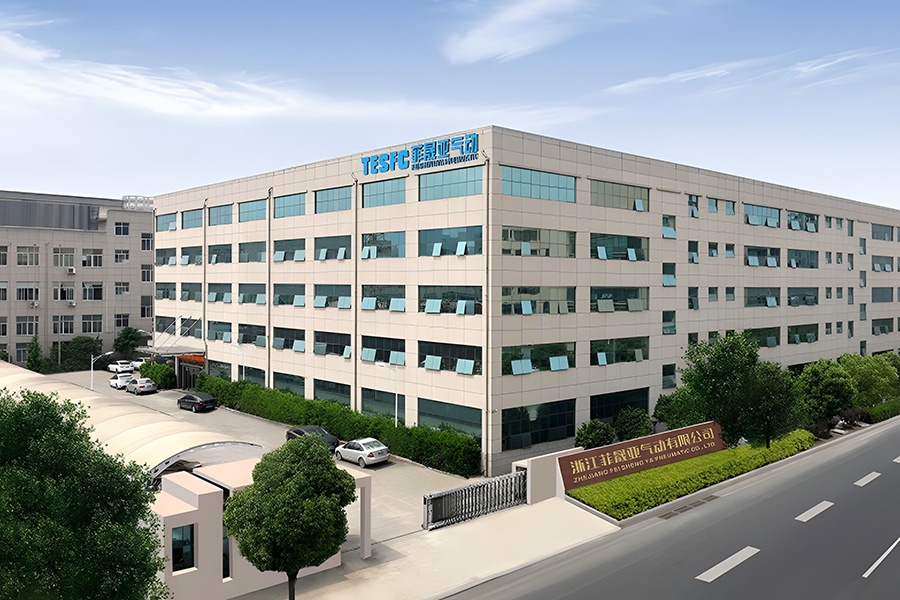
Zhejiang Feishengya Pneumatic Components Co., Ltd.
Zhejiang Feishengya Pneumatic Components Co., Ltd. is a pneumatic component enterprise that integrates scientific R&D, production and processing, operation and sales, technical services, import and export trade, and personnel training. It specializes in the production, processing, and sales of pneumatic components such as cylinders, solenoid valves, and thin air cylinder.
The company has always adhered to serving society with practical quality, high-quality service, comprehensive technology, and reasonable prices, and is committed to striving to create a "Chinese famous brand".
Our company has nearly a hundred advanced processing pieces of equipment. There are currently 120 employees, including over 20 professional and technical personnel, with an annual production capacity of 500,000 pieces (sets) of various components. We have advanced production processes, complete testing methods and equipment, and a high-quality workforce. We organize production and sales with a practical and innovative concept, and have passed ISO9001 international quality management system certification. We use CAD, SOLIDWORKS, and ERP for engineering design and enterprise management. Continuously increasing product development efforts and investment, continuously upgrading and improving equipment and products to meet customer needs with higher cost-effectiveness, and providing high-performance products and convenient and fast services to new and old users anytime, anywhere.
Thin Air Cylinder manufacturer - Feishengya Pneumatic adheres to the principles of "strict production, scientific management, continuous improvement, and stable quality with a rigorous and down-to-earth work style, a pioneering spirit of self-improvement, an honest and down-to-earth management style, and first-class production technology. Relying on the increasingly mature market system and flexible industry mechanisms, we adhere to the development path of technology oriented, outward oriented, and comprehensive, and provide more and better quality services for various industries.
All employees of Zhejiang Feishengya Pneumatic Components Co., Ltd. sincerely welcome friends from all industries to visit, exchange ideas and cooperate with us.
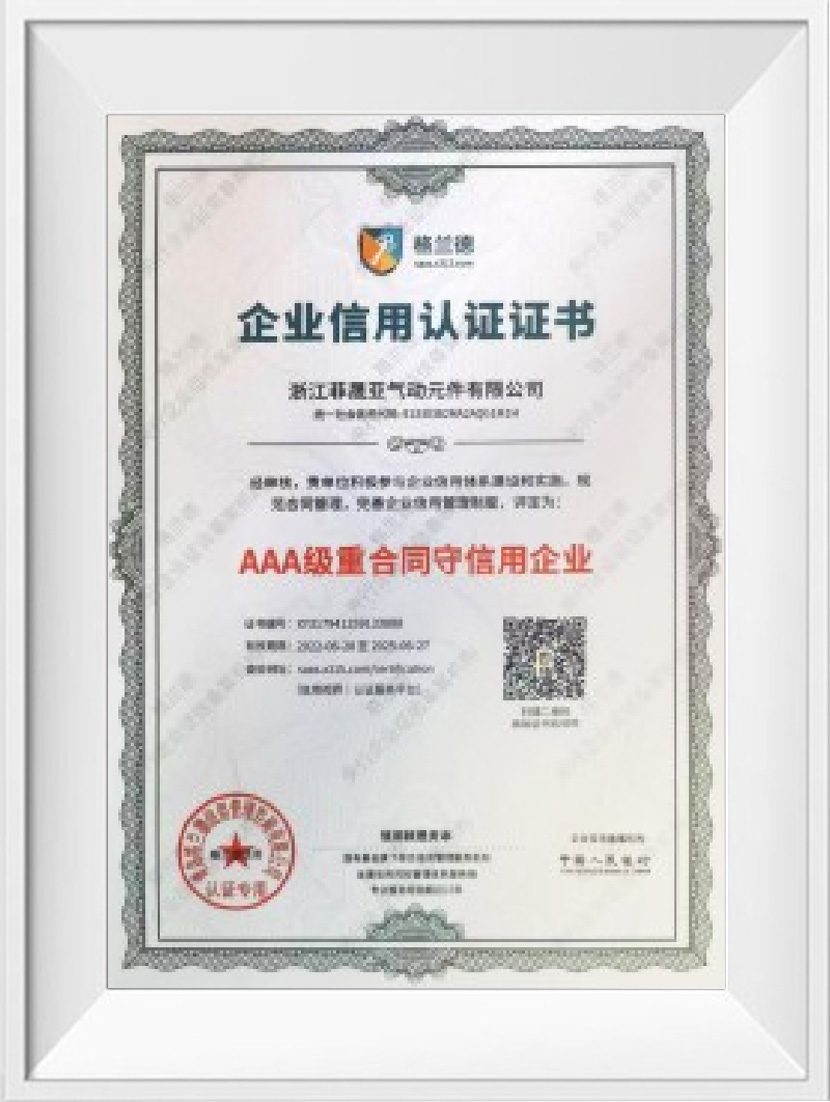
Certificate
Certificate-cs
Certificate-cs
Certificate-cs
Our LATEST NEWS

2026-09-11

2026-09-04
2026-08-28
A Thin Air Cylinder — also known by the name Low Profile Air Cylinder — delivers controlled linear motion through a compact pneumatic actuator built for situations where installation height or overall machine space runs limited. Compressed air drives a piston and piston rod inside it, turning that air pressure into mechanical movement that handles pushing, pressing, clamping, lifting, stopping, ejecting, and positioning tasks.
Set against standard pneumatic cylinders, a thin air cylinder carries a shorter body length paired with a flatter overall structure. That combination fits naturally into compact equipment layouts, densely packed automation modules, small fixtures, and machine designs where a conventional cylinder would simply take up more room than what's available.
Modern industrial automation keeps pushing toward equipment that runs smaller, moves faster, and stays easier to maintain. A Low Profile Air Cylinder answers that need by helping engineers reclaim installation space, all while holding onto the core strengths pneumatic actuation is known for — straightforward control, quick response, clean operation, and movement that repeats reliably cycle after cycle.
A thin air cylinder brings a reduced overall height or a shortened cylinder body into the mix of pneumatic actuators available. Wherever saving installation space matters more than relying on a long standard cylinder body, this design steps in.
A Thin Air Cylinder takes compressed air pressure and turns it into linear mechanical force. Once compressed air makes its way into the internal chamber, it pushes against the piston, driving the piston rod to either extend or retract.
Its core functions cover a fair amount of ground:
What sets a Low Profile Air Cylinder apart comes down to its compact body structure. That design lets the cylinder slide into narrow spaces where a standard cylinder would struggle to fit at all.
The design brings several benefits along with it:
Automation engineers often find that this compact structure cuts down on interference between machine components, making actuator placement a more straightforward matter overall.
Within a pneumatic system, a thin air cylinder takes on the role of motion output component. Controlled compressed air arrives from valves, and the cylinder turns that air energy into mechanical action that actually gets work done.
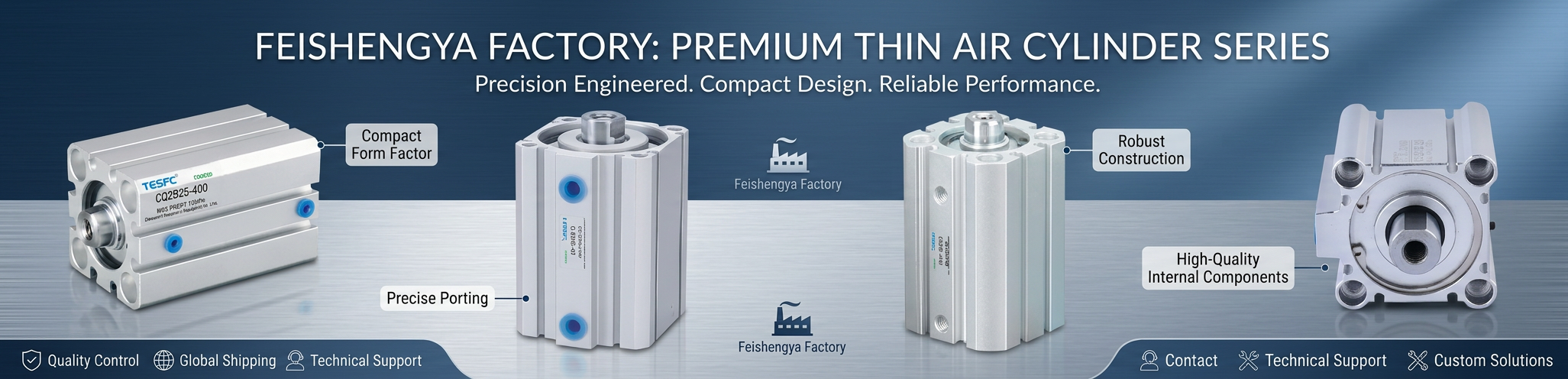
A typical pneumatic system built around a thin air cylinder tends to include:
The cylinder handles the final piece of movement once air source, pressure, direction, and flow have already been brought under control upstream.
Pneumatic automation frequently calls on thin air cylinders for tasks such as:
Thin air cylinders prove especially valuable when equipment has to work within limited space yet still needs movement it can count on.
They contribute toward improvements in:
Choosing the right thin air cylinder for the job often cuts down on the need for complicated mechanical linkages, which in turn keeps the overall machine structure simpler to work with.
Application requirements around force, stroke, mounting, and control differ from one setup to the next, and that variety is exactly why thin air cylinders show up in several different design forms.
Compressed air does the work in both directions with a double-acting thin air cylinder — extension and retraction alike.
You'll typically find this design where:
Only the outward stroke of a single-acting thin air cylinder runs on compressed air; getting back relies on a spring or some outside force instead.
This design shows up often in:
A magnetic piston sits inside a magnetic thin air cylinder, pairing naturally with external magnetic switches to detect position along the stroke.
Equipment that benefits from this includes:
Side loads become an issue in certain applications, and that's when a thin air cylinder with external guidance or a built-in guiding structure earns its place.
Common uses stretch across:
End-of-stroke impact softens considerably once cushioning gets built into a Low Profile Air Cylinder, and the overall motion benefits from that smoother finish.
This variant suits conditions like:
Compact pneumatic systems sometimes need something beyond the standard options — specialized thin cylinder structures built for intermediate positioning, combined motion patterns, or custom mounting arrangements. Getting the right fit here depends heavily on stroke sequence, the logic driving control, and just how much room the installation actually allows.
Machines calling for compact structure, quick response, and steady short-stroke movement turn to thin air cylinders across a wide range of settings.
Electronic and electrical equipment production leans on thin air cylinders quite often, covering tasks such as:
Their compact size works well within dense workstations and layouts built for precision assembly.
Low Profile Air Cylinders show up throughout packaging equipment, supporting functions like:
Short strokes paired with fast response keep the packaging process moving without interruption.
Assembly machinery frequently incorporates thin air cylinders for jobs including:
Being low profile means several actuators can sit close together within compact fixtures.
Automotive component production sometimes calls on thin air cylinders for purposes like:
Stable mounting alongside correctly matched force selection matters greatly across repeated industrial cycles.
Wherever actuation needs to stay compact, thin air cylinders find a place in:
Air cleanliness and material compatibility deserve close attention across these particular applications.
Thin air cylinders lend support to processes such as:
Smooth speed control helps cut down on vibration while keeping the process consistent.
A Thin Air Cylinder also finds a fit within:
Stable motion, minimal leakage, and a long service life all trace back to correct installation — a point that matters even more given how often thin cylinders end up working within tight machine spaces.
A number of details deserve confirmation before a Thin Air Cylinder goes into place:
Short-stroke tasks make up much of what thin air cylinders handle, so the stroke chosen needs to line up with actual travel distance rather than extending beyond what's needed.
Several checks matter here:
Rod bending, seal wear, and motion that won't stay steady often trace back to side load. Thin air cylinders were never meant to double as guide components.
Practices worth following include:
Depending on the model, thin air cylinders can be mounted through several different approaches.
Options commonly seen include:
Whatever mounting structure gets used, it needs to hold rigid through cycling — otherwise vibration and misalignment tend to follow.
Keeping airflow stable comes down to a few practical steps:
Once installation wraps up, starting at low speed makes sense. From there, speed can climb step by step while impact, vibration, and how stable the end position stays all get watched closely.
Extra attention becomes necessary when:
Compact pneumatic motion applications find a solid match in Feishengya's Thin Air Cylinder products, built around space-saving structure, steady operation, and practical integration with industrial equipment.
Equipment where installation space runs limited is exactly what Feishengya Low Profile Air Cylinder products are built to serve. That compact cylinder body helps trim machine height while supporting a cleaner actuator layout across fixtures, automation modules, packaging systems, and testing equipment.
Short-stroke operations — pressing, clamping, stopping, ejecting, positioning — make up much of what Feishengya's Thin Air Cylinder products are suited for.
A number of practical features come with the product line:
Pneumatic components — air cylinders, solenoid valves, and related products included — have long been part of what Zhejiang Feishengya Pneumatic Components Co., Ltd. produces and processes. Machining equipment, established assembly procedures, and thorough inspection methods all support dimensional consistency and steady component performance.
CAD and SOLIDWORKS drive product design and structural development at Feishengya, while ERP systems keep production management organized. ISO9001 quality management certification backs up standardized process control, inspection, and ongoing improvement.
Real operating requirements within pneumatic systems get close attention at Feishengya, covering areas such as:
Put together, these factors position Feishengya's Thin Air Cylinder products well for automation equipment, packaging machinery, assembly fixtures, testing devices, electronics production equipment, and general industrial machinery.
A Thin Air Cylinder has a lower profile and shorter body than many standard air cylinders. It is selected when installation space is limited, while a standard cylinder may be used where longer body length and broader mounting options are acceptable.
A Low Profile Air Cylinder is commonly used in electronics manufacturing, packaging machinery, assembly fixtures, conveyor modules, testing equipment, compact automation systems, and light industrial devices requiring short-stroke motion.
A Thin Air Cylinder works by allowing compressed air to enter the cylinder chamber. The air pressure pushes the piston, and the piston rod moves outward or inward. A directional valve controls the airflow path and cylinder movement.
Selection should consider bore size, stroke length, working pressure, output force, load direction, mounting method, operating speed, air quality, sensor requirement, and available installation space.
A Thin Air Cylinder should not be exposed to significant side load unless external guidance is added. For side-load applications, use guide rails, floating joints, or guided actuator structures to protect the piston rod and seals.
Slow movement may be caused by low air pressure, restricted fittings, undersized tubing, insufficient valve flow, blocked silencers, excessive load, or internal leakage. The complete air circuit should be checked.
Leakage may be caused by worn seals, scratched piston rods, damaged fittings, loose tubing, contaminated air, or improper installation. Clean compressed air and regular inspection help reduce leakage.
Yes. Many Thin Air Cylinder models can use magnetic sensors when equipped with a magnetic piston. Sensors provide position feedback for PLC control, sequence confirmation, and machine safety logic.

Phone: +86-15957736756
E-mail: [email protected]
Add: No.7, Yongxing Second Road, Chengdong Industrial Functional Zone, Chengdong Subdistrict, Yueqing City, Zhejiang Province, P.R.China
Copyright © Zhejiang Feishengya Pneumatic Components Co., Ltd. All Rights Reserved.
 Low Profile Air Cylinder
 English
 русский
 عربى
عربى Español