/

/

Search
Category
2026-09-11
Industry News
In automated equipment, movement is only part of the job. The moving part also needs to arrive at the intended location in a controlled way. This becomes important when a machine repeatedly pushes, lifts, clamps, presses, or transfers an object.
A standard pneumatic cylinder can provide linear movement, but some applications ask for more than movement alone. The load may sit away from the center of the moving part. It may also experience a sideways force during operation. Under these conditions, keeping the movement steady can become more difficult.
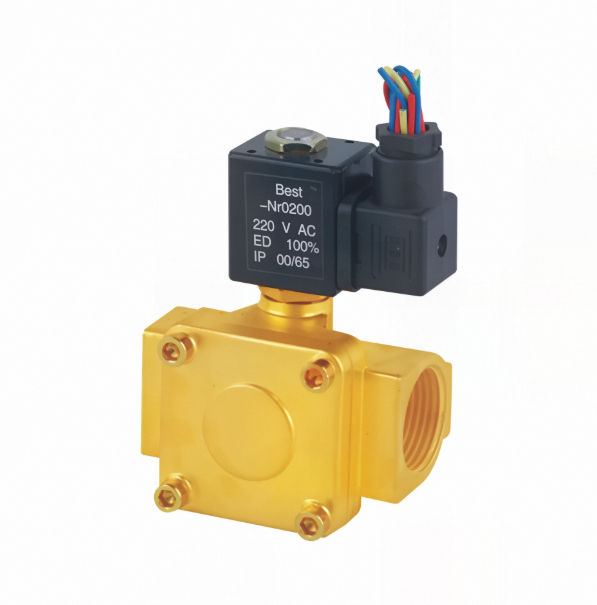
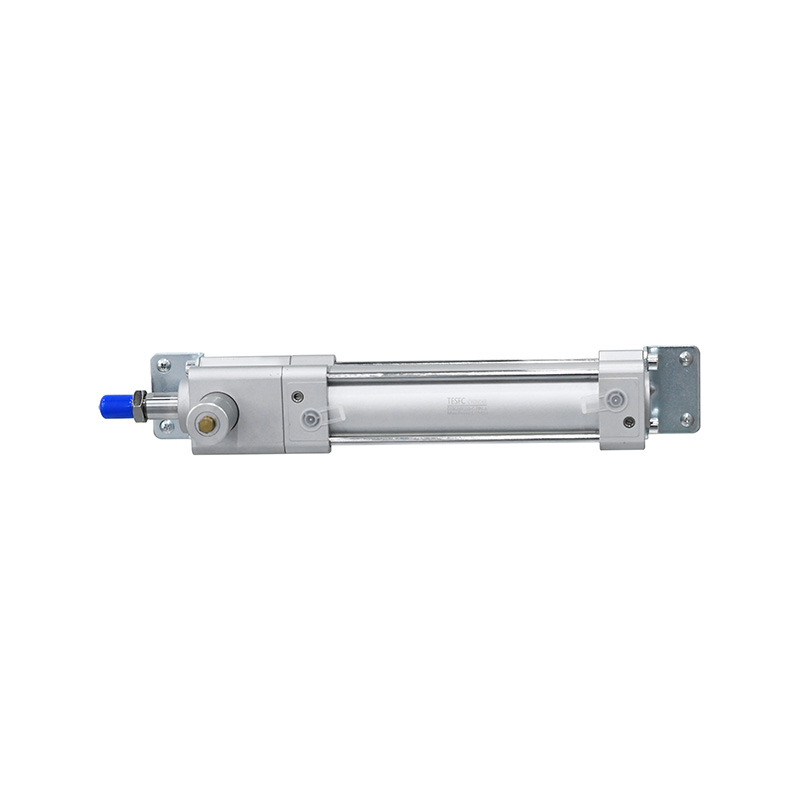
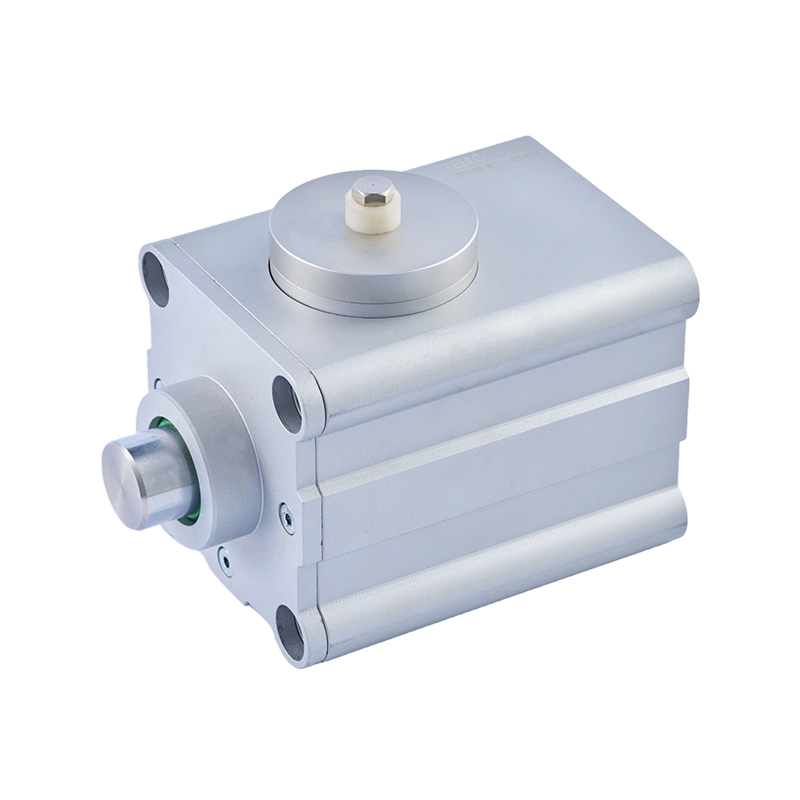
A Pneumatic Cylinder with Guide Rods approaches this issue by combining pneumatic movement with a guiding structure. The guide rods help control the path of the moving section. This can make the arrangement more suitable for applications where movement direction and positioning stability matter.
The growing use of automated equipment has made this distinction more noticeable. Designers are looking beyond the basic question of whether a cylinder can move a component. They are also considering how that component behaves while moving and when it reaches its working position.
Positioning stability refers to how consistently a moving component follows its intended path and reaches its working location. It does not necessarily mean precision in the sense of highly specialized positioning equipment. In many industrial machines, the practical goal is simpler. The moving part should travel in a predictable direction without unnecessary movement.
Imagine a machine that pushes a small component into place. If the moving section shifts sideways or rotates during the stroke, the final position may not be as consistent as expected. The same concern can appear in clamping, sorting, feeding, packaging, and assembly operations.
Several factors can influence positioning behavior:
A pneumatic cylinder with guide rods can address some of these concerns by providing additional physical guidance. The cylinder supplies the pushing or pulling movement, while the guide structure helps keep that movement organized.
This division of roles can be useful when a machine needs repeatable motion but does not require a separate guiding mechanism built elsewhere in the equipment.
A pneumatic cylinder creates movement through compressed air. The moving section travels along the cylinder's intended direction. Without additional guidance, the connected load can sometimes introduce forces that are not perfectly aligned with that direction.
Guide rods provide another point of support around the moving section. Their purpose is not simply to make the cylinder look more substantial. They help manage the relationship between the moving part and the load.
This can be especially useful when the load is broad, offset, or connected to a plate. A guided arrangement can help keep that plate facing the intended direction instead of allowing unwanted rotation.
The basic idea can be viewed in a simple way:
| Machine Need | Possible Role of Guide Rods |
|---|---|
| Straight movement | Help maintain the intended travel direction |
| Off-center loading | Help manage uneven forces |
| Repeated pushing | Support consistent movement |
| Clamping | Help keep the moving section aligned |
| Assembly | Help maintain the working orientation |
| Material handling | Help control movement of attached parts |
The exact effect depends on the cylinder design and the machine around it. Guide rods do not automatically solve every positioning issue. Proper mounting and suitable load arrangement remain important.
Unwanted rotation can become a problem when the load is connected away from the cylinder's centerline. A conventional cylinder may still move the load forward, but the load can experience a turning influence.
This is where a guided design can become useful.
Guide rods help restrict rotational movement around the travel direction. The moving plate or attached component can therefore maintain a more stable orientation as it travels.
Consider a simple pushing operation. The machine needs to move a plate toward another component. The plate has a relatively wide shape, and the point where force is applied does not sit exactly in the center. Without adequate guidance, the plate may have a tendency to turn or shift.
A guided cylinder can provide additional support around that moving plate. The result is a more controlled relationship between the cylinder and the attached load.
This does not mean the guide rods should be treated as a replacement for every external guide system. The application still needs to be evaluated as a whole. Load arrangement, mounting conditions, movement direction, and operating environment all influence the result.
The value of guided movement becomes clearer when looking at everyday machine operations. Many automated systems perform simple actions repeatedly. The challenge is keeping those actions consistent as the machine continues to work.
Packaging equipment is one example. A moving component may need to push, press, fold, or position packaging material. A guided cylinder can help maintain the orientation of the working part during these repeated movements.
Assembly equipment presents another application. A component may need to be moved toward another part along a defined path. If the working piece shifts during the movement, the assembly process can become less predictable.
Material handling systems can also benefit. A guided cylinder may move a platform, stop, or pushing element while helping it remain aligned.
Other potential applications include:
Clamping operations
The moving section may need to remain in a controlled orientation while holding an object.
Push-and-position operations
A component may need to travel toward a fixed location without unnecessary rotation.
Feeding equipment
Repeated movement can benefit from a stable path.
Assembly machines
Controlled movement can help keep parts in the intended relationship.
Sorting equipment
A guided moving element can help direct products toward different positions.
Light material transfer
The guide structure can help manage the movement of an attached platform or plate.
The suitability of the cylinder depends on the actual machine design. It should be selected according to the load and movement requirements rather than simply because it includes guide rods.
The position of a load can be just as important as its weight. A centered load may place relatively even forces on the moving assembly. An offset load can create a different situation.
When a load sits away from the center, the cylinder may need to deal with a turning influence as the moving part travels. If the machine also introduces side forces, the demand on the guiding structure can increase.
This is why machine designers often consider the complete connection between the cylinder and the moving component.
A useful way to think about the relationship is:
Load position → force direction → movement behavior → positioning stability
Changing one part of this chain can affect the others.
For example, moving a component farther from the cylinder may change how forces act on the assembly. A guided cylinder may provide more control than a basic cylinder arrangement, but it still needs to be installed in a way that suits the load.
This is particularly relevant for wide plates and brackets. The guide rods can help distribute movement support around the moving section rather than leaving the cylinder to control everything on its own.
Yes. A suitable cylinder can still behave poorly if it is installed without enough attention to the surrounding machine.
Mounting surfaces should be suitable for the application. Connected components should move along the intended path. Unnecessary resistance or misalignment can place additional demands on the moving assembly.
Installation should also leave enough room for the guide rods to operate without interference. Nearby machine parts should not obstruct the moving section.
Some practical installation considerations include:
The installation environment can also affect maintenance. If the guide rods are difficult to access, routine inspection may be neglected. A design that allows easy observation and cleaning can make long-term care more manageable.
Positioning stability is therefore not created by the cylinder alone. It is the result of the cylinder, guide structure, load, mounting arrangement, and machine layout working together.
Guide rods are exposed to the working environment. Dust, debris, moisture, and other contaminants can accumulate around moving surfaces depending on where the equipment is used.
A dirty guide surface may interfere with smooth movement. Wear can also develop over time if the moving parts operate under unsuitable conditions.
Routine observation can help identify changes before they become larger machine problems. Operators may notice unusual movement, noise, resistance, or visible surface contamination.
Maintenance practices can include:
| Maintenance Focus | What to Observe |
|---|---|
| Guide rod surface | Dirt, scratches, or visible damage |
| Moving section | Unusual movement or resistance |
| Connections | Loose or displaced components |
| Surrounding area | Debris or contamination |
| Lubrication | Whether care follows product guidance |
| Overall motion | Changes from normal operation |
The correct maintenance method depends on the specific cylinder design. Some products may require particular lubrication or cleaning practices, while others may have different care requirements.
It is better to follow the manufacturer's maintenance instructions than to apply a general method to every guided pneumatic cylinder.
Buyers often begin with basic questions about movement, load, and available installation space. These are useful starting points, but positioning stability also deserves attention.
The intended task should be clearly defined. A cylinder used for simple pushing may have different requirements from one connected to a broad moving plate. The direction of the load and the possibility of side forces should also be considered.
The surrounding machine is another part of the decision. A guided cylinder may help reduce the need for additional guidance in some designs, potentially simplifying the arrangement. In other machines, an external guide system may still be appropriate.
Before choosing a product, buyers can consider:
What movement does the machine require?
Define whether the cylinder will push, pull, clamp, lift, or position a component.
Where will the load be connected?
Consider whether the load is centered or offset.
Could side forces occur?
Repeated sideways forces may affect the selection.
How much installation space is available?
The cylinder and guide rods need room to operate.
What is the working environment like?
Dust, moisture, and other conditions may influence maintenance needs.
How will the cylinder be maintained?
Easy access can make routine inspection more practical.
Does the manufacturer provide application guidance?
Product-specific information can help determine whether the cylinder fits the intended machine.
Automation depends on repeatable actions. A machine may perform the same push or positioning movement many times during normal operation. Small changes in movement can become noticeable when they affect connected components.
A Pneumatic Cylinder with Guide Rods can provide an additional layer of movement control. The pneumatic section generates the motion, while the guide rods help maintain the orientation and path of the moving part.
That can make the design attractive for applications where a simple cylinder arrangement may not provide enough control.
Still, positioning stability is not determined by one component. The cylinder must work with the load, mounting structure, machine frame, and operating conditions. A guided design can support controlled movement, but the complete system needs to be considered during selection and installation.
As automated equipment becomes more varied, this distinction is useful. A cylinder is not only a device that makes something move. In many machines, how that movement is controlled can be just as important as the movement itself.
RECOMMENDED PRODUCTS

Phone: +86-15957736756
E-mail: [email protected]
Add: No.7, Yongxing Second Road, Chengdong Industrial Functional Zone, Chengdong Subdistrict, Yueqing City, Zhejiang Province, P.R.China
Copyright © Zhejiang Feishengya Pneumatic Components Co., Ltd. All Rights Reserved.
 Pneumatic Component Factory
 English
 русский
 عربى
عربى Español