/

/

Search
Category
2026-10-23
Industry News
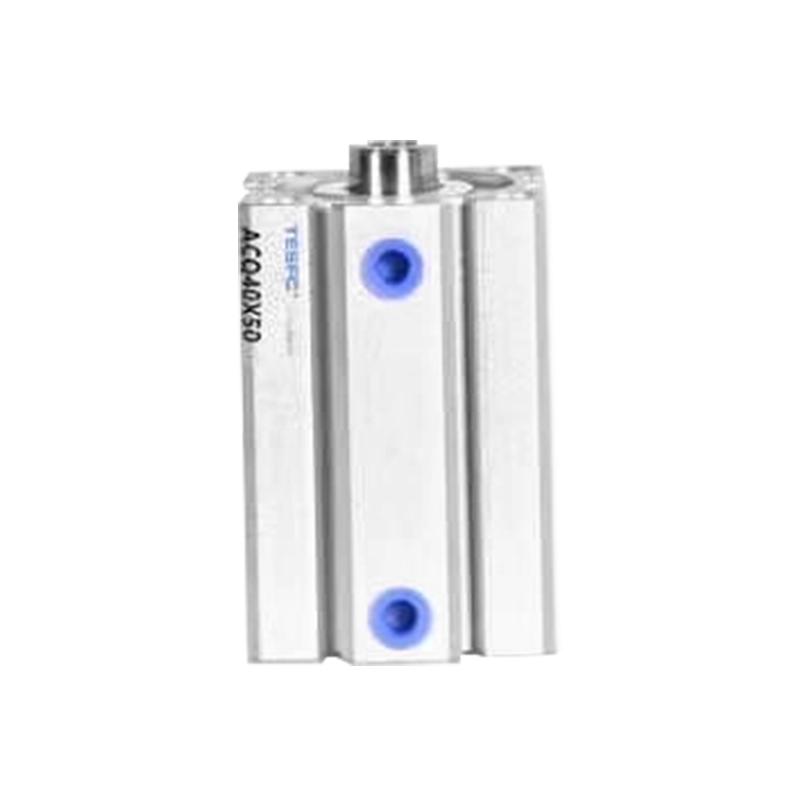
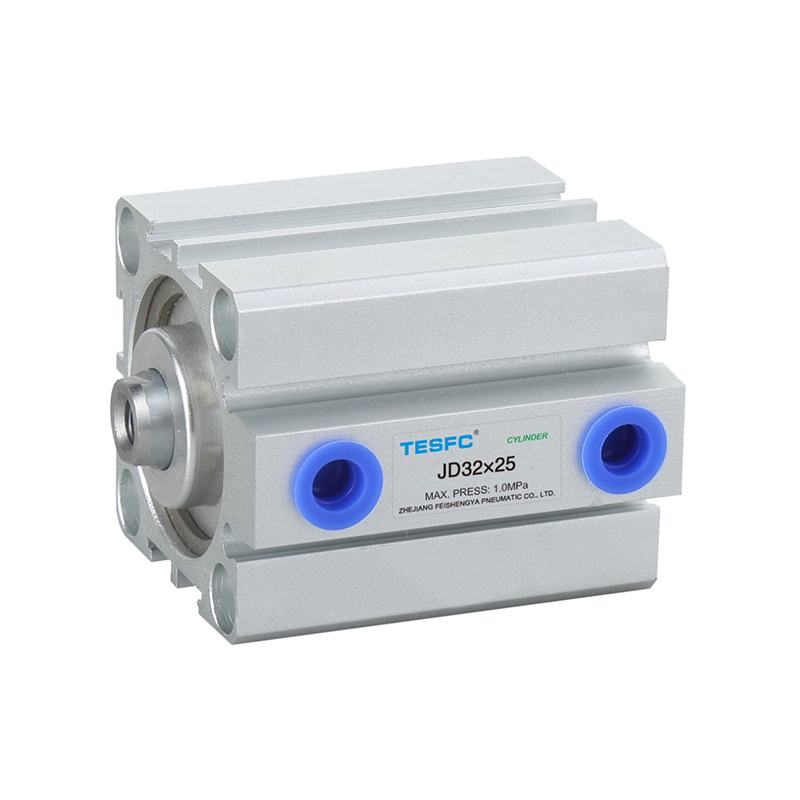
Automated assembly lines, compact processing stations and precision handling equipment often leave little room for conventional pneumatic actuators. Standard cylinder lengths and diameters can crowd neighboring components, force awkward layouts or prevent the addition of sensors and fixtures. An ultra-thin body reduces the axial and radial space required while still delivering linear force. A Magnetic Piston Air Cylinder of this type combines the short overall length with a piston that can be detected by external switches, giving both the motion and the feedback needed in tight machine designs.
Many modern machines pack multiple stations into a single frame. Every millimeter saved on an actuator can free room for tooling, wiring or access panels. Conventional cylinders with longer barrels or protruding mounting features occupy volume that designers would rather allocate elsewhere. An ultra-thin profile shortens the installed length and keeps the cylinder within the envelope of the moving assembly. The result is a cleaner layout in which the pneumatic drive no longer dictates the size of the surrounding structure.
The short body leaves clearance for adjacent mechanisms. Mounting faces and port locations can be arranged so that hoses and fittings do not interfere with other moving parts.
When the cylinder itself is thin, space remains for magnetic switches, proximity sensors or custom end tooling. Designers can place these items close to the work zone without extending the overall machine length.
With less volume claimed by the actuator, the frame, covers and access doors can be drawn tighter. The same functional stroke is achieved inside a smaller footprint, which is often the deciding factor in desktop or multi-station equipment.
A permanent magnet is fixed to the piston. As the piston travels, the magnetic field moves with it and can be sensed by a switch mounted on the cylinder exterior.
Reed or solid-state switches clipped or bolted to the cylinder body detect the magnet's position and send a signal to the controller. The signal confirms that the piston has reached the end of stroke or an intermediate point.
The controller uses the switch output to advance the next step of the cycle, to verify that a motion has completed, or to trigger an alarm if the expected position is not reached. Reliable detection therefore depends on both the magnet strength and the correct placement of the switch.
The bore determines the theoretical force at a given supply pressure. The actual load, friction and any external forces are calculated so that the chosen bore supplies adequate thrust without excess size.
Stroke length is set by the distance the tooling or workpiece must move. Excess stroke adds length and cost; insufficient stroke leaves the mechanism short of its target.
Supply pressure must remain inside the range for which the seals and structure are designed. Pressure that is too low reduces force; pressure that is too high shortens seal life.
Vertical loads, high speeds or rapid cycling increase the demand on the piston and seals. These factors are included when the bore and cushioning arrangements are chosen.
Overall length, mounting-hole pattern and port orientation must fit the available space and align with the driven mechanism. Dimensional drawings are compared with the machine layout before the model is finalized.
Compact automation modules use them for short, precise strokes where space is limited. Assembly stations employ them for pressing, locating or transferring small parts. Packaging mechanisms with restricted envelopes rely on them for sequential motions. Electronic-component handlers place them inside densely packed frames. Custom machinery incorporates them whenever the combination of short length and position feedback is required.
Length, diameter and mounting projection are checked against the tightest clearance in the machine.
If position detection is required, the magnet location and the switch mounting method are confirmed to be compatible with the control system.
Hole patterns, thread sizes and port types must match the machine's prepared surfaces and pneumatic piping.
Bore, stroke, pressure range and load capacity are verified against the calculated forces and speeds.
Body material, piston-rod material and seal compounds are reviewed for suitability in the expected temperature and contamination conditions.
Dimensional drawings, performance data and installation guidance are requested so that integration can proceed without uncertainty.
The mounting location and stroke direction are fixed relative to the driven load. Mechanical clearances are checked through the full travel. The air supply, valves and speed-control devices are sized and connected according to the circuit diagram. If magnetic switches are used, they are positioned to detect the required points and their output signals are verified. During commissioning the stroke, speed and end-of-travel behavior are observed and adjusted until the motion is stable and repeatable.
A cylinder whose bore and stroke match the load and travel avoids chronic under- or over-loading. Proper mounting and alignment reduce side loads that wear seals and bearings. Cycle rate and environmental conditions are taken into account so that the chosen seals and lubricants remain effective. Periodic inspection of air lines, fittings and switch connections keeps the system operating as designed. When these elements are aligned, the ultra-thin cylinder continues to deliver the required motion inside the limited space for which it was chosen.
| Selection Factor | Purpose of the Check | Consequence of Mismatch |
|---|---|---|
| Body length and diameter | Fits within the machine envelope | Interference with other components |
| Magnetic piston and switch | Provides reliable position feedback | Missing or false signals in the control sequence |
| Bore size | Supplies adequate force at available pressure | Insufficient thrust or oversized installation |
| Stroke length | Matches the required mechanical travel | Incomplete motion or wasted space |
| Mounting pattern and ports | Aligns with prepared surfaces and piping | Extra adapters or redesign of the interface |
| Operating pressure range | Protects seals and structure | Premature wear or loss of force |
Short overall length, magnetic position detection, correctly sized bore and stroke, and mounting compatibility together determine whether an ultra-thin cylinder can serve a space-constrained design. Matching these attributes to the actual load, travel and available envelope produces a reliable pneumatic axis without forcing the machine to grow around the actuator. Zhejiang Feishengya Pneumatic Components Co., Ltd. produces magnetic piston air cylinders in ultra-thin configurations for compact automation. Review of available bore sizes, stroke lengths, mounting styles and magnetic-switch options against the machine layout and force requirements allows selection of a cylinder suited to precise motion inside limited space.
RECOMMENDED PRODUCTS

Phone: +86-15957736756
E-mail: [email protected]
Add: No.7, Yongxing Second Road, Chengdong Industrial Functional Zone, Chengdong Subdistrict, Yueqing City, Zhejiang Province, P.R.China
Copyright © Zhejiang Feishengya Pneumatic Components Co., Ltd. All Rights Reserved.
 Pneumatic Component Factory
 English
 русский
 عربى
 Español